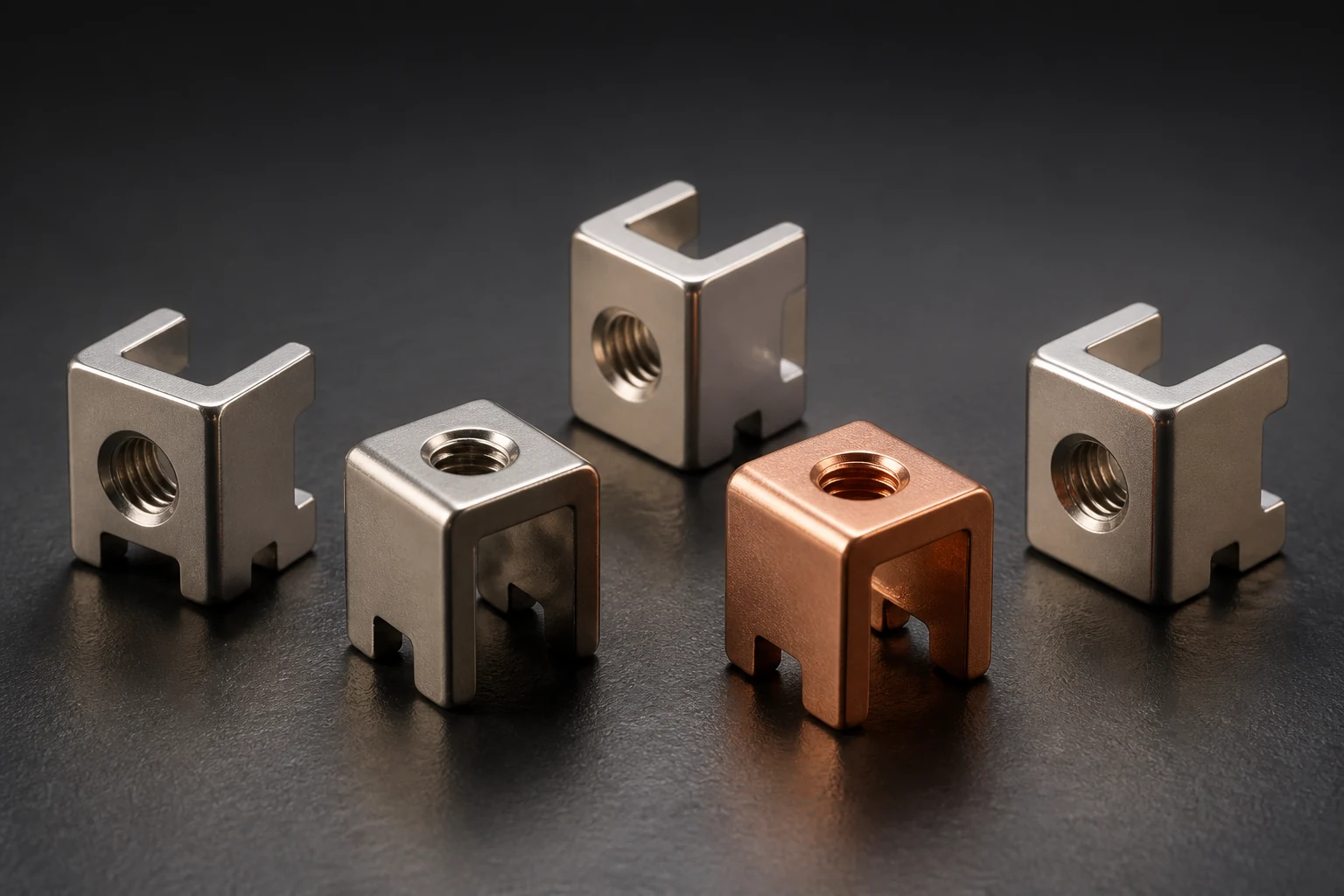
Tin-plating acceptance should establish both solderability at assembly and an acceptable whisker-related short-circuit risk in service. NASA's published work documents different finish structures and failure mechanisms. A successful soldering trial addresses only part of that assessment.
Specify the complete coating stack
Name the substrate, pretreatment, underplate, surface composition, thickness range and measurement areas. A drawing that only says tin plated does not identify pure tin, an alloy or a nickel barrier. Define soldering surfaces, mating contacts and cut edges separately. Appearance alone cannot reliably confirm finish composition; agree suitable composition and thickness measurements for the part geometry.
Separate solderability from whisker evidence
Conductive whiskers can create faults depending on nearby gaps, detached debris and system consequences. NASA's mitigation research does not justify a blanket claim that matte tin, nickel underplate or coating eliminates all risk. Its aerospace context helps identify mechanisms; commercial applications still need their own material and compliance decisions.
A solderability record should identify the finish lot, storage, conditioning, solder, flux and acceptance method. Results from a newly finished sample should not automatically represent aged inventory.
Include the manufacturing and handling route
Scratching, forming, probing and assembly can alter the local surface. Use specimens that follow the proposed production route and retain same-lot controls where useful. Review whether changes in cleaning, rework or mechanical assembly remain within the original qualification.
- Mark solderable, mating and exposed tin-plated regions
- Record composition and thickness of each coating layer
- Maintain separate conclusions for solderability and whisker risk
Request traceable first-article evidence
Ask for the finish-stack drawing, test methods, original readings, lot and date identification, packaging and storage conditions, and a process-change agreement. Long-life, small-gap or high-consequence systems need a reliability review suited to their use. There is no universal coating thickness or storage period for every terminal.
Apply this guide to a project
Use product pages to identify the hardware family and the calculator for early estimates only. Acceptance depends on drawings, operating conditions and project tests.