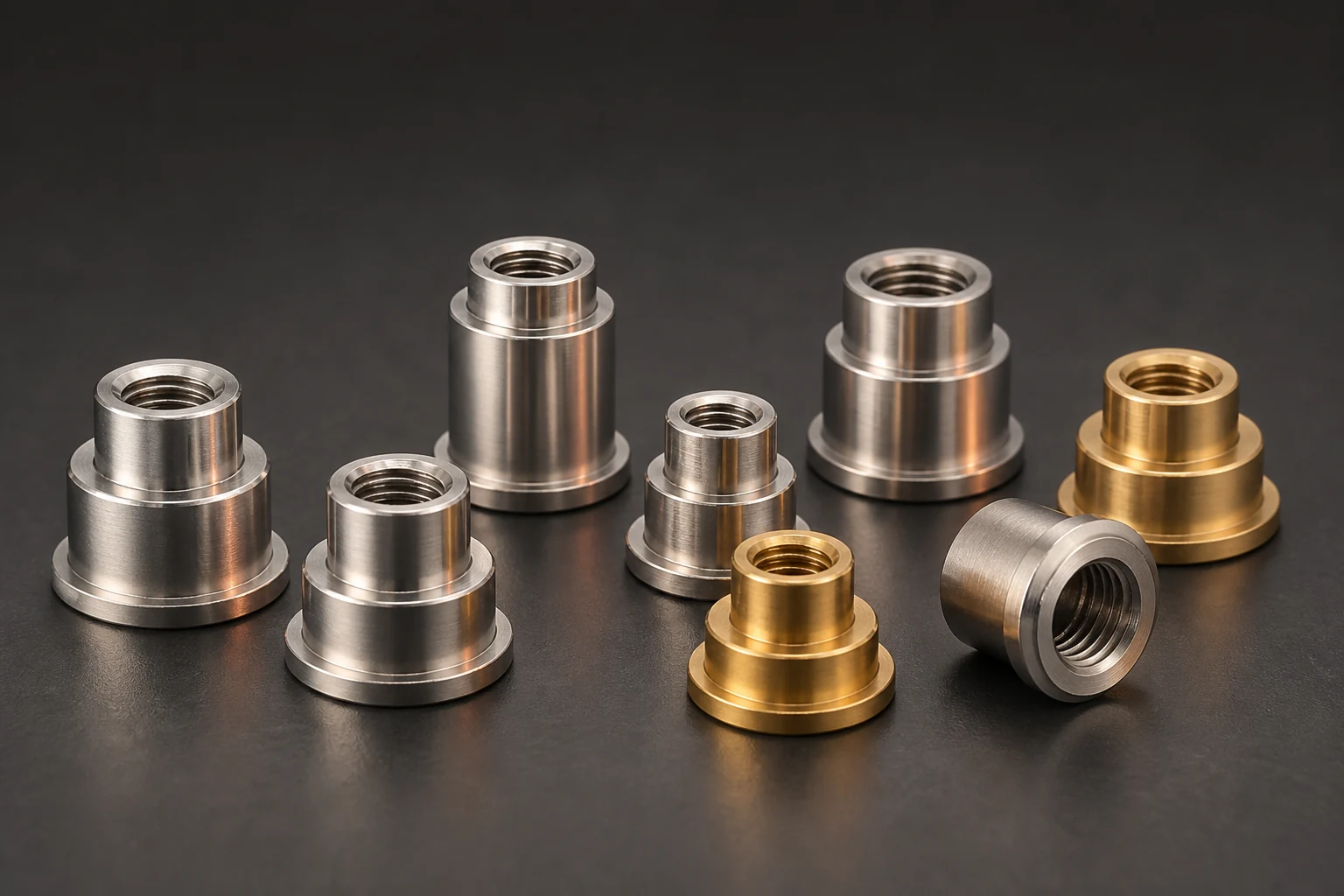
Measure cover-tape peel force for the actual carrier, cover and sealing combination, retaining curves at agreed angle, speed and conditioning. An acceptable average does not exclude local peaks or feeding interruptions. Production release also needs loaded-tape retention, peeling and pickup checks on the intended feeder.
Fix the tape and sealing combination
IEC 60286-3:2022 publicly addresses automatic-placement tape packaging of leadless/stump-leaded components. Confirm applicability to the hardware and packaging before specifying the standard revision; appearance alone does not establish identical compliance for every metal part.
Advantek distinguishes pressure-sensitive and heat-activated covers. Its PUC adhesion data specify polystyrene carrier film and particular sealing conditions, with stated material compatibility. Record cover model, carrier material, width, adhesive edges and sealing program. Validate changed combinations rather than borrowing another model's typical value.
Retain curves and test conditions
We recommend defining peel angle, speed, length, conditioning time and temperature/humidity, checking instrument calibration and range. Retain force curves, averages, peaks and exception locations under the adopted specification. State units clearly; gf is a force unit, not the mass unit g.
Connect sealing equipment and material batches to curves, identifying reel-start, middle and splice samples. Equal averages may hide different peaks; do not discard transient exceptions. Retain storage/transport history for subsequent measurements instead of comparing them with newly sealed specimens without qualification.
Validate loaded tape on the intended feeder
Use actual loaded tape and the intended feeder, recording peel routing, pull settings and pickup outcomes. Check tearing, adhesive drag and lifted/displaced hardware, retaining event positions. An empty-carrier curve alone cannot establish stable feeding with the actual parts.
Assess both retention and smooth peeling; lower force is not necessarily better. Establish windows from material-specific guidance and production/transport objectives, without arbitrarily increasing heat or pressure to silence alarms. Reassess packaging and pickup after tape, sealing, storage or feeder changes.
- Control tape and sealing revisions
- Keep curves and local exceptions
- Test actual loaded-tape feeding
Frequently asked questions
Does an acceptable average release production feeding? Also review peaks, retention and pickup results.
Can PSA tape use heat-seal parameters directly? Follow model-specific documentation; the bonding mechanisms are not interchangeable.
RFQ and tape-validation inputs
Provide hardware drawings, pocket/sealing designs, tape models and the intended feeder. Agree peel methods, conditioning and reporting, including storage/transport requirements and loaded-tape acceptance. Confirm the exact combination before sample-reel and production-change validation.
Apply this guide to a project
Use product pages to identify the hardware family and the calculator for early estimates only. Acceptance depends on drawings, operating conditions and project tests.