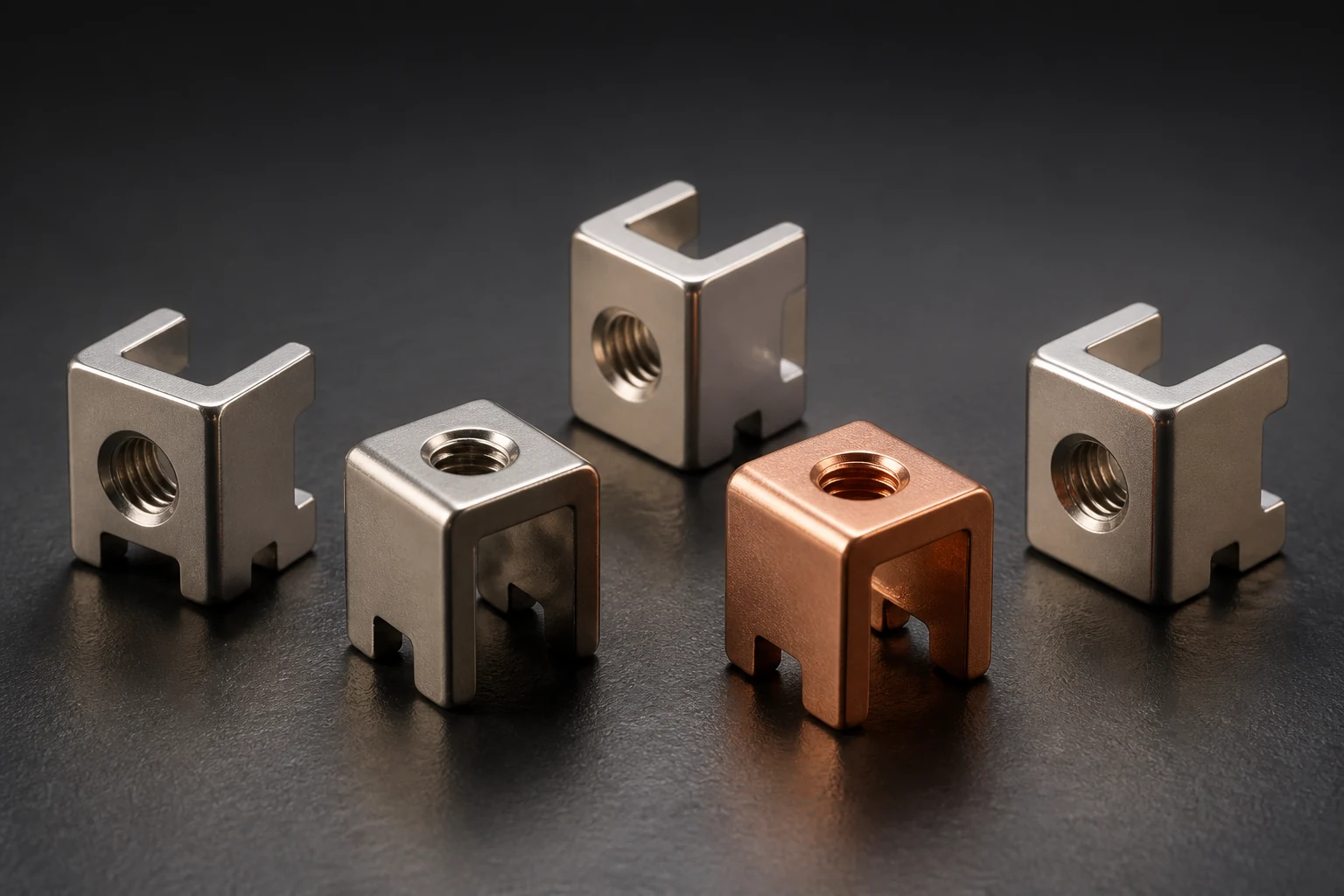
Establish nozzle and fixture access before freezing PCB layouts for selective soldering of through-hole power terminals. Pin insertion does not establish safe nozzle approach. Review terminals, nearby SMT parts and equipment in the same assembly model, then validate the process on representative boards.
Check the full nozzle envelope and motion path
Ersa identifies dense through-hole layouts, limited access and solder breakaway as important concerns. It distinguishes wettable and non-wettable nozzles and discusses geometry and energy input. Aperture diameter alone cannot define layout keep-outs.
We recommend obtaining actual nozzle and fixture models from the assembly owner. Map underside pads, protruding pins, nearby SMT parts and supports. Review approach, soldering, withdrawal and movement separately. Set clearance from equipment and process evidence rather than one universal drawing value.
Confirm heat input after establishing access
Freeze board thickness, hole copper, connected layers, terminal sections and nearby sensitive parts for preheat and local-solder review. Changes made for soldering must still satisfy electrical and temperature-rise requirements. Electrical and manufacturing owners should jointly decide thermal-relief suitability.
Record actual temperature locations and process data on representative boards, checking fill, wetting, bridging and heat damage. Temperature, time and fill criteria require component and product bases. Do not extend heating because a surface looks bright or derive universal settings from nozzle size.
Include nozzle condition and rework
Ersa also identifies nozzle oxidation, wear and maintenance as relevant concerns. We recommend first-article confirmation of nozzle identity and condition, retaining program, fixture and solder-system revisions. Changed nozzles or underside parts require renewed access and sample review.
Agree inspection and rework for abnormal joints, retaining reheating and reinspection records. Do not force terminal insertion or extraction to establish solder quality or repair energized boards. Review selective soldering and through-hole reflow independently; qualification does not transfer automatically.
- Review nozzle, fixture and complete paths
- Validate heat input and joints on representative boards
- Freeze maintenance, revisions and rework rules
Frequently asked questions
Does a small nozzle fit every dense terminal layout? Review its whole envelope, paths, wetting and heat input.
Does THR qualification cover selective soldering? Not directly. Review the two processes independently.
RFQ inputs for selective-solder layout
Provide underside drawings, terminals and pins, copper layers, adjacent parts, nozzles and fixtures. Identify process stage, joint criteria and rework. Complete access and representative-board review before freezing terminal and PCB geometry.
Apply this guide to a project
Use product pages to identify the hardware family and the calculator for early estimates only. Acceptance depends on drawings, operating conditions and project tests.