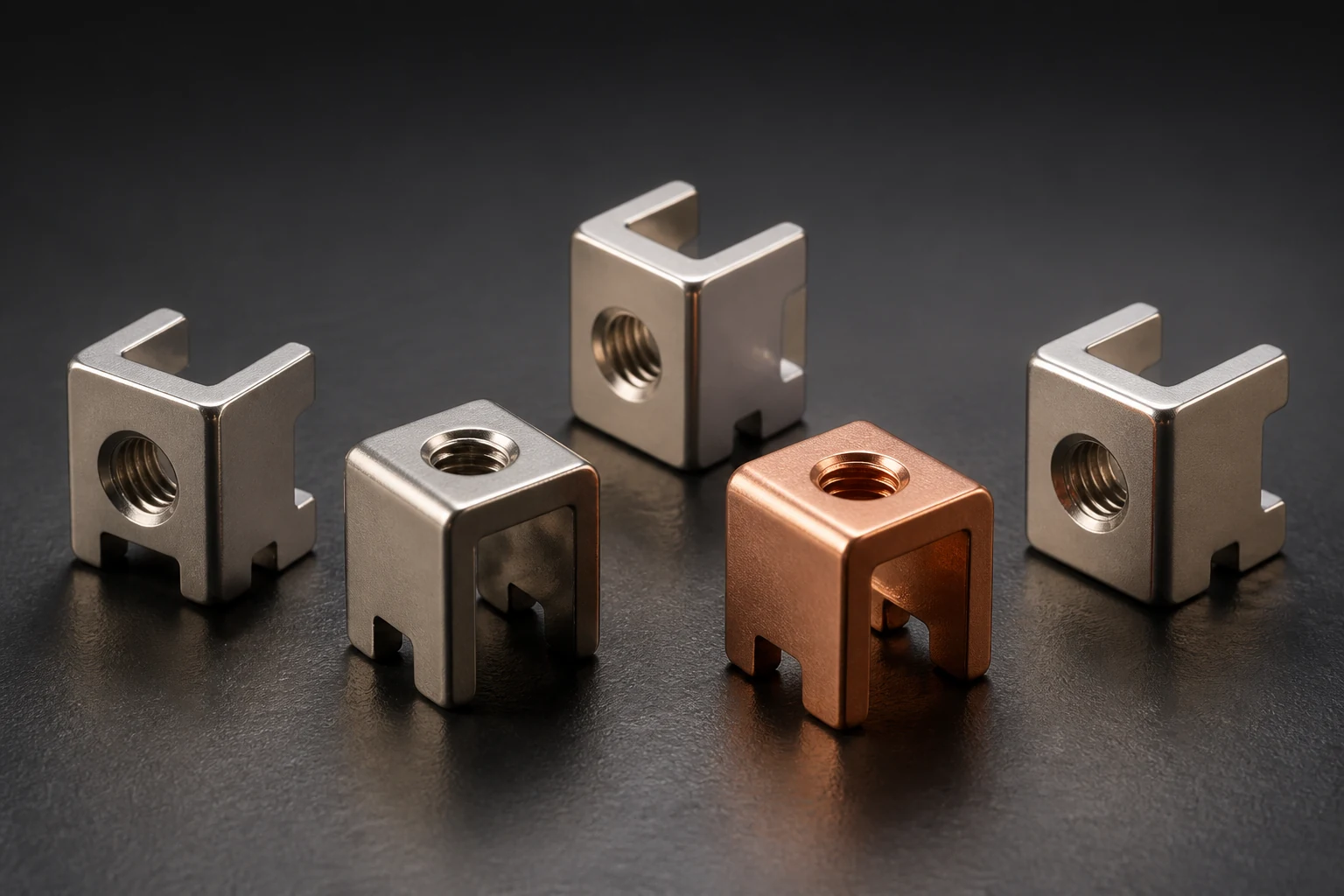
Do not determine multi-pin terminal capacity by multiplying a single-pin reference current by pin count. Confirm which pins join the same power net, then review PCB copper, holes, soldering and external wiring before validating resistance and temperature rise on the actual board.
Identify electrical and structural pins
Würth's REDCUBE guidance lists conductor dimensions, wiring, ambient temperature and heat distribution as system-level current factors. Its press-fit model figures do not transfer to solder terminals, but the need to review the complete path is relevant to selection.
Mark every pin's net and function on terminal and PCB drawings. Do not count locating or structural pins in the main current path without confirmation, or combine pins belonging to different circuits into one total rating.
Review actual branch conditions
Joining several pins to one net does not ensure equal current. Copper entry direction, path length, vias and connection conditions affect the branches. Trace the path from the external conductor through the terminal and into the board layers.
For soldered structures, check pins, holes, pads and the solder process. Review press-fit versions against their own hole specification. Contact figures for a different assembly process cannot fill gaps in the current design.
Validate local conditions on the complete board
Use actual copper thickness, layer connections, cable and cooling in sample boards. Measure key-path resistance and temperatures near multiple pins. A terminal-top average alone can miss a PCB hotspot; choose locations from the layout.
Review revalidation needs after changing cable entry, copper routing or pin arrangement. Results apply to the recorded terminal/board combination rather than establishing a universal current for the whole multi-pin category.
Frequently asked questions
Does doubling pin count double current capacity? Actual sharing and thermal boundaries need review; there is no direct multiplication rule.
Is a larger local pad sufficient? Review incoming copper, layer transitions, external wiring and assembly connections too.
UPS power-terminal RFQ inputs
Send pin mapping, nets, PCB stack-up and hole/pad details with wiring, current waveform and environment. Identify solder or press-fit construction, listing resistance, local temperature-rise and mechanical-fixing validation needs.
Apply this guide to a project
Use product pages to identify the hardware family and the calculator for early estimates only. Acceptance depends on drawings, operating conditions and project tests.