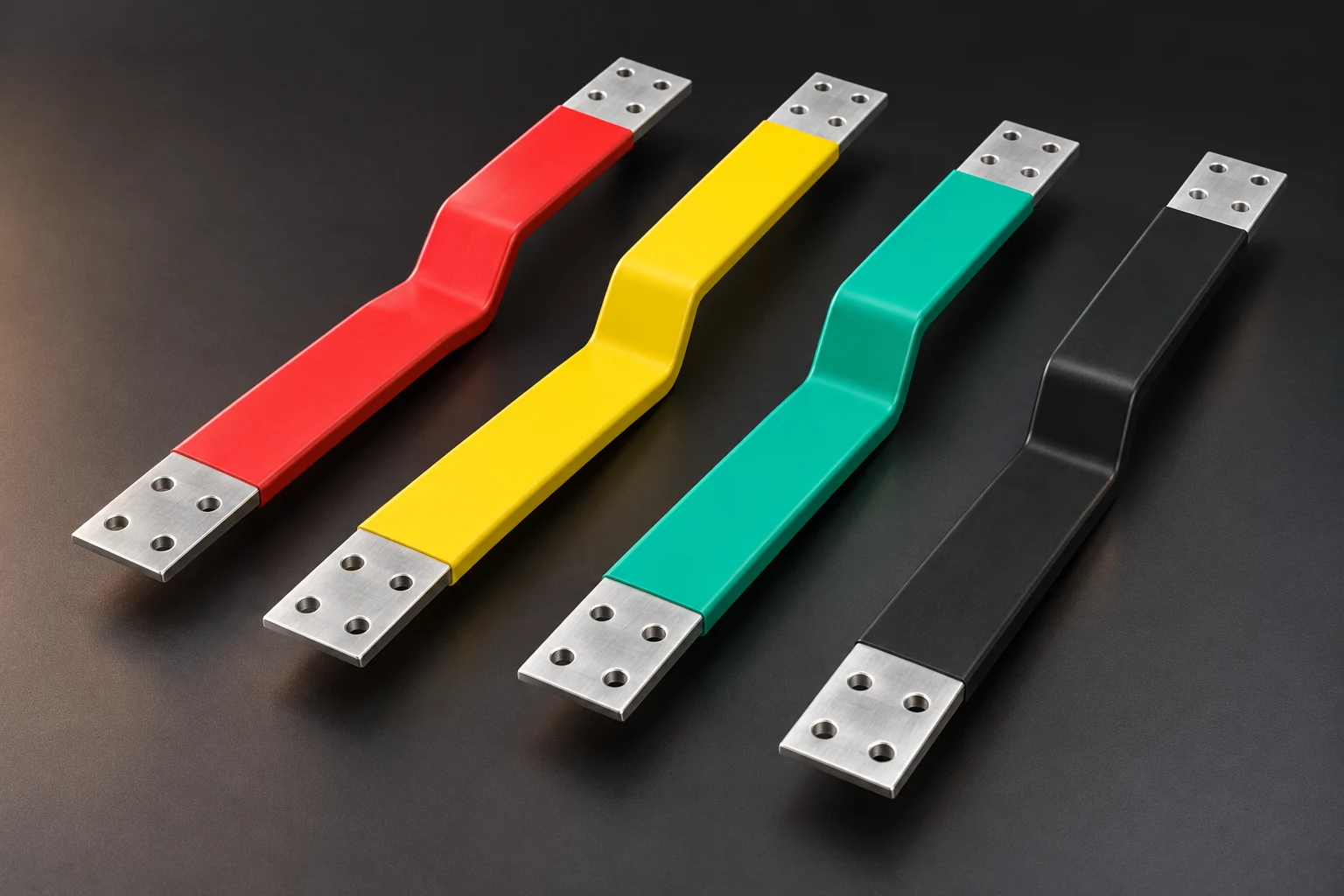
Define the Cu-Al busbar, joints, supports and connected parts as a specific vibration specimen. Select a method matching the environment, then agree fixtures, inputs and acceptance. A bare-part pass does not establish the reliability of the installed cabinet connection.
Identify the environment and qualification object
IEC 60068-2-6 covers specified sinusoidal vibration severities; IEC 60068-2-64 covers broadband random vibration. Both require assessment with the relevant specification. A method number alone does not define every acceptance condition for a busbar project.
We recommend having product and test owners distinguish packaged transport, operating structure and joint qualification. Specify frequency, amplitude or acceleration, sweep and duration for sine tests; agree spectrum, bandwidth, power spectral density and duration for random tests. Define axes, specimens and sequence without borrowing unsupported universal values.
Retain actual supports and end constraints
We recommend drawing supports, free lengths, joint stacks and attached masses. Identify included cables, insulators and cabinet structure. Have the test owner approve substitutes and their functions rather than adding nonexistent supports for convenient clamping.
Ask the laboratory to review fixtures and control or response locations, explaining how fixture effects and specimen responses are distinguished. Retain drawings, mounting photographs and tightening records. Results apply to recorded mounting conditions; review changed support spacing or end connections for renewed testing.
Record mechanical and electrical acceptance separately
We recommend agreeing checks for loosening, cracks, permanent deformation and insulation damage, plus resistance or functional monitoring methods. Energized monitoring needs an appropriately equipped test owner's isolation, protection and shutdown plan; do not improvise it during an ordinary mechanical test.
Preserve abnormal locations, original traces and joint condition before retightening or repair. A sinusoidal pass cannot automatically replace random validation, and test hours cannot directly become service life. Temperature rise, withstand voltage and short-circuit behavior retain their separate requirements.
- Match methods and inputs to the environment
- Retain support and connected-part boundaries
- Agree monitoring, abnormal records and change review
Frequently asked questions
Can equal-section busbars share a vibration report? Review geometry, materials, joints, supports and mounting, not section alone.
Does a packaged transport pass prove safe cabinet operation? Packaging and operating structures have different specimen boundaries.
RFQ and test-delegation drawings
Supply installation drawings, busbar geometry, support coordinates, joint sections, attached parts and environment. List methods, inputs, axes, monitoring and acceptance bases, identifying unresolved system-owner conditions. Agree busbar procurement and system vibration qualification separately.
Apply this guide to a project
Use product pages to identify the hardware family and the calculator for early estimates only. Acceptance depends on drawings, operating conditions and project tests.