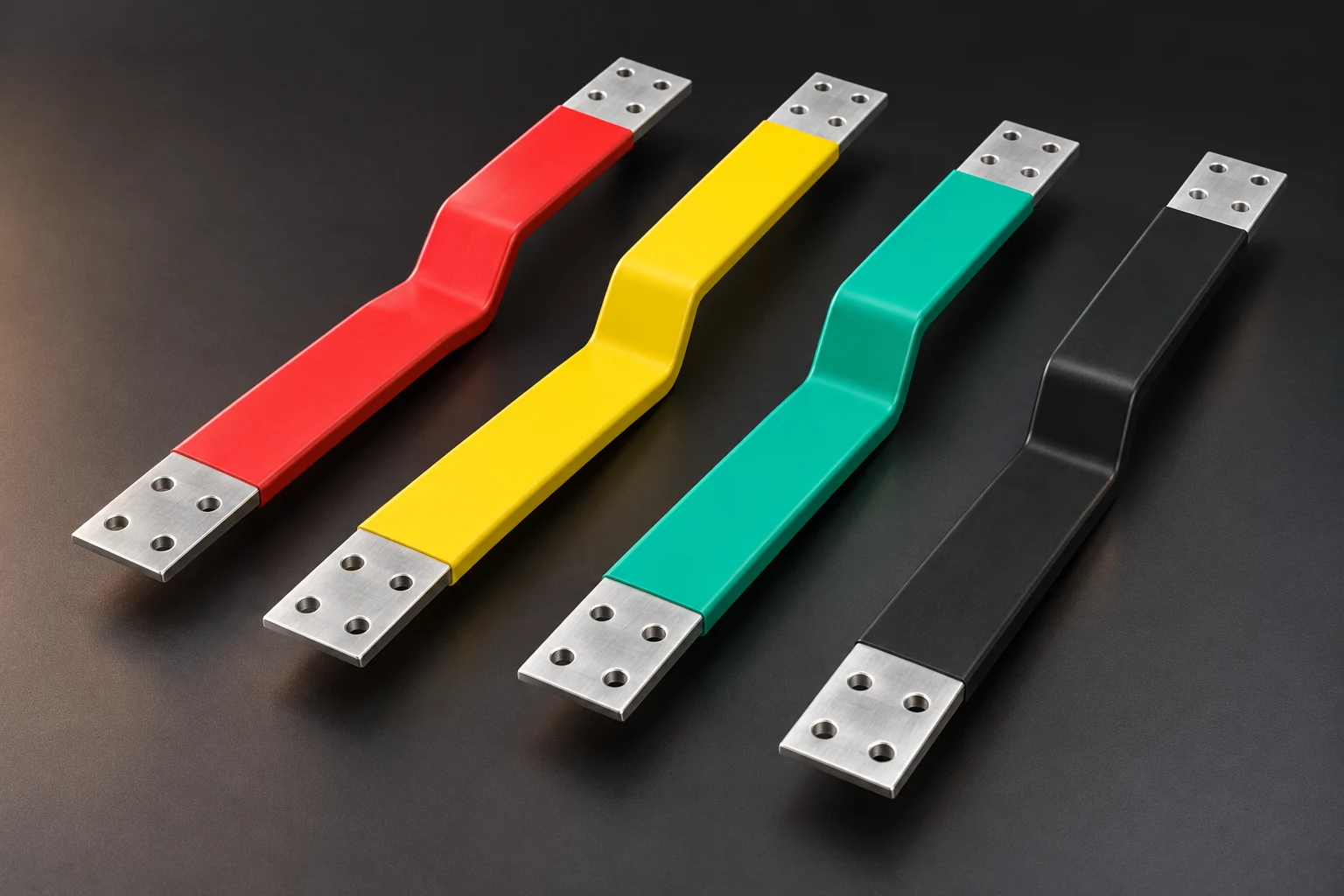
Before reading TI or RTI, identify the Cu-Al busbar insulation material, thickness and assessed property. Material temperature indices are not directly finished-busbar operating limits, and one short heat exposure cannot establish service life. Actual joint hotspots and the finished assembly require separate review.
Identify method and property endpoint
IEC 60216-1:2025 provides general material thermal-ageing and evaluation procedures, with a predetermined property change and an applicable time-temperature relationship. We recommend retaining property, endpoint, specimen and method edition rather than a lone temperature number.
UL's RTI guide distinguishes electrical, mechanical-impact and mechanical-strength categories. Read the category relevant to insulation, support or impact duty; do not select the highest across categories to represent all properties. Preserve TI and RTI methods and report identities instead of interchanging equal units.
Match reports to supplied material and thickness
IEC's 2025 edition summary adds related-material selection and thickness-sensitivity procedures. Check grade, color, final condition and specimen thickness against covered variants. Record recovered tubing thickness, coating cure and support materials separately; a resin-family name is not material confirmation.
UL's reading guide separates minimum thickness and RTI categories. Retain complete applicable material records. Its example card illustrates fields, not busbar ratings. Have the responsible party review coverage again when supplied material changes.
Assess the finished assembly under installed thermal conditions
We recommend recording load, ambient, cooling and measurement locations, inspecting joint hotspots, insulation ends and supports separately. Review short process exposure, continuous duty and overload events under their own conditions. Do not directly derive universal finished-product life from material indices.
Confirm metal/insulation combinations, assembly pressure and environmental requirements. Material indices do not replace finished-product temperature-rise, dielectric or other required verification. Have the designer establish operating temperature and life-validation plans, not use an index as the equipment's long-term temperature target.
- Match property endpoint and method
- Check material variants and thickness
- Review finished hotspots and application separately
Frequently asked questions
Does higher RTI permit a higher busbar current rating? Establish current using actual structure and temperature-rise validation.
Can one high-temperature bake replace long-term ageing evidence? Short exposure and long-term property evaluation have different purposes and methods.
RFQ and insulation-validation inputs
Provide busbar drawing, insulation form, final thickness, load and environment. Identify property categories and required material reports. Agree substitute approval, installed measurements and finished-validation ownership without a universal operating temperature or years-of-life claim.
Apply this guide to a project
Use product pages to identify the hardware family and the calculator for early estimates only. Acceptance depends on drawings, operating conditions and project tests.