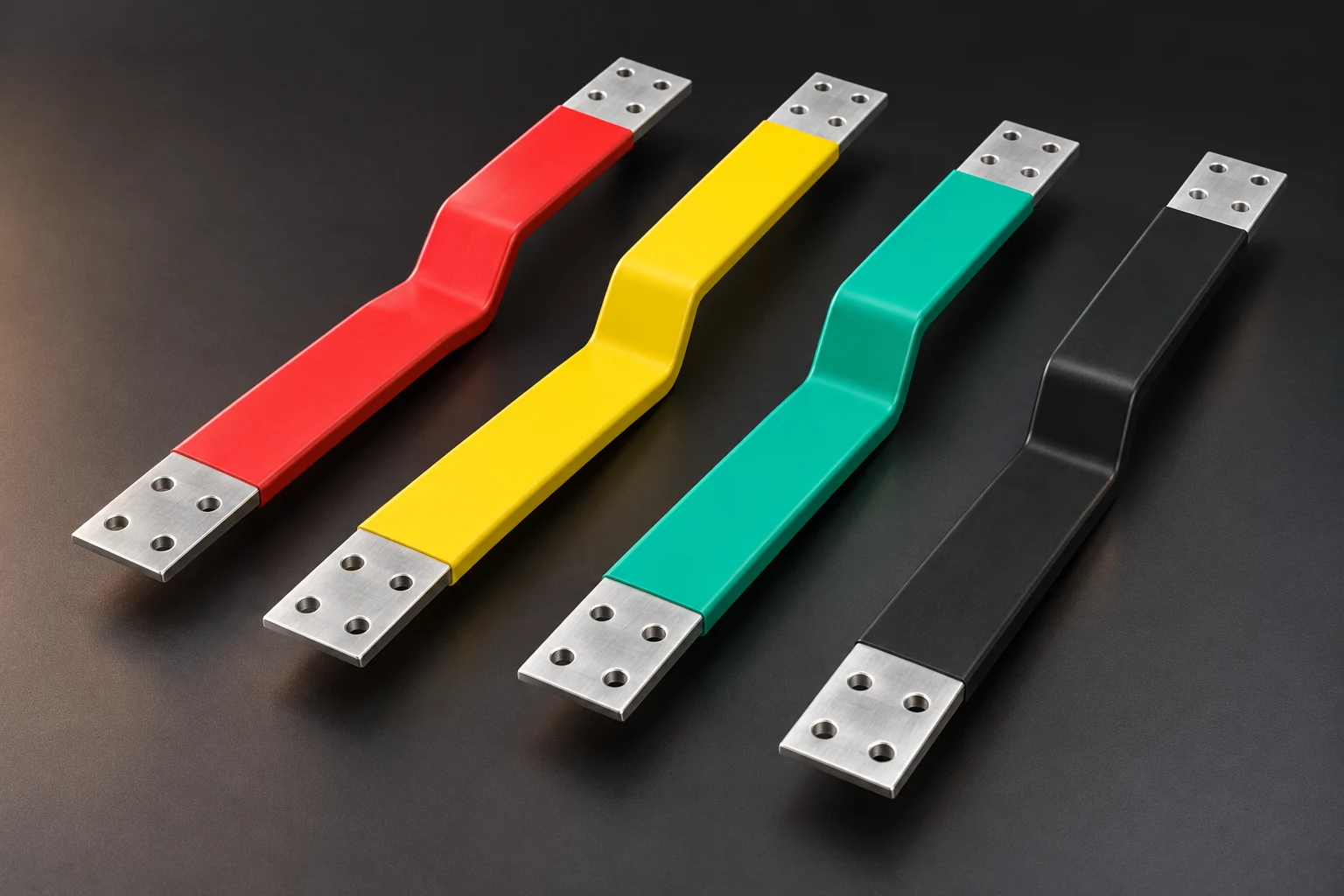
Review GWFI, GWIT and end-product glow-wire requirements separately for Cu-Al busbar insulation. Material indices support preselection; they do not automatically establish that a busbar or equipment passed end-product testing. Obtain reports matching the material and specimen conditions before the equipment designer decides applicability.
Identify the method behind each reported value
IEC 60695-2-12 addresses material glow-wire flammability index, GWFI; IEC 60695-2-13 addresses material glow-wire ignition temperature, GWIT. Their procedures and evaluations differ, and their public scopes describe material preselection. We recommend recording method, index and report number separately, not a temperature without its method.
A generic flame-retardant description or another burning classification does not supply missing GWFI or GWIT results. Check the actual tubing, coating and support materials, rather than sharing reports across products with only the same resin-family name.
Match material and specimen conditions to supply
Request complete report pages and check grade, revision, color or other variants, specimen thickness and conditioning. Link supplied batches to approved material and ask which changes the report covers. Review different thicknesses without interpolating between reported values.
Record recovered tubing wall thickness separately from material-coupon thickness. For coatings, identify actual processing and final condition. Have responsible parties review uncertain substitute coverage and additional testing, not only the highest temperature on a sales sheet.
Confirm end-product requirements independently
IEC 60695-2-11 addresses end products under defined electrically heated-source conditions, assessing ignition and flame propagation. We recommend having the equipment owner decide required tests, specimens, positions and criteria. Separate material preselection from finished-product acceptance.
Retain metal, insulation ends, neighboring parts and installation in the applicability review. Glow-wire results do not replace dielectric, temperature-rise or overall fire-risk assessment, and do not justify non-burning or never-failing claims. Use a test provider with appropriate safety arrangements.
- Keep GWFI and GWIT methods/results separate
- Check material and specimen conditions
- Confirm end-product requirements with the equipment owner
Frequently asked questions
Are equal GWFI and GWIT temperatures interchangeable? Their methods and evaluations differ; retain both identities.
Does an accepted material report qualify an insulated busbar? Confirm equipment requirements and actual test coverage; do not transfer conclusions automatically.
RFQ insulation-acceptance inputs
Provide busbar drawings, insulation form, final thickness and equipment category. List material or end-product tests, report coverage, change approval and validation ownership. Public standard scopes are not complete clauses or evidence of a universal product classification.
Apply this guide to a project
Use product pages to identify the hardware family and the calculator for early estimates only. Acceptance depends on drawings, operating conditions and project tests.