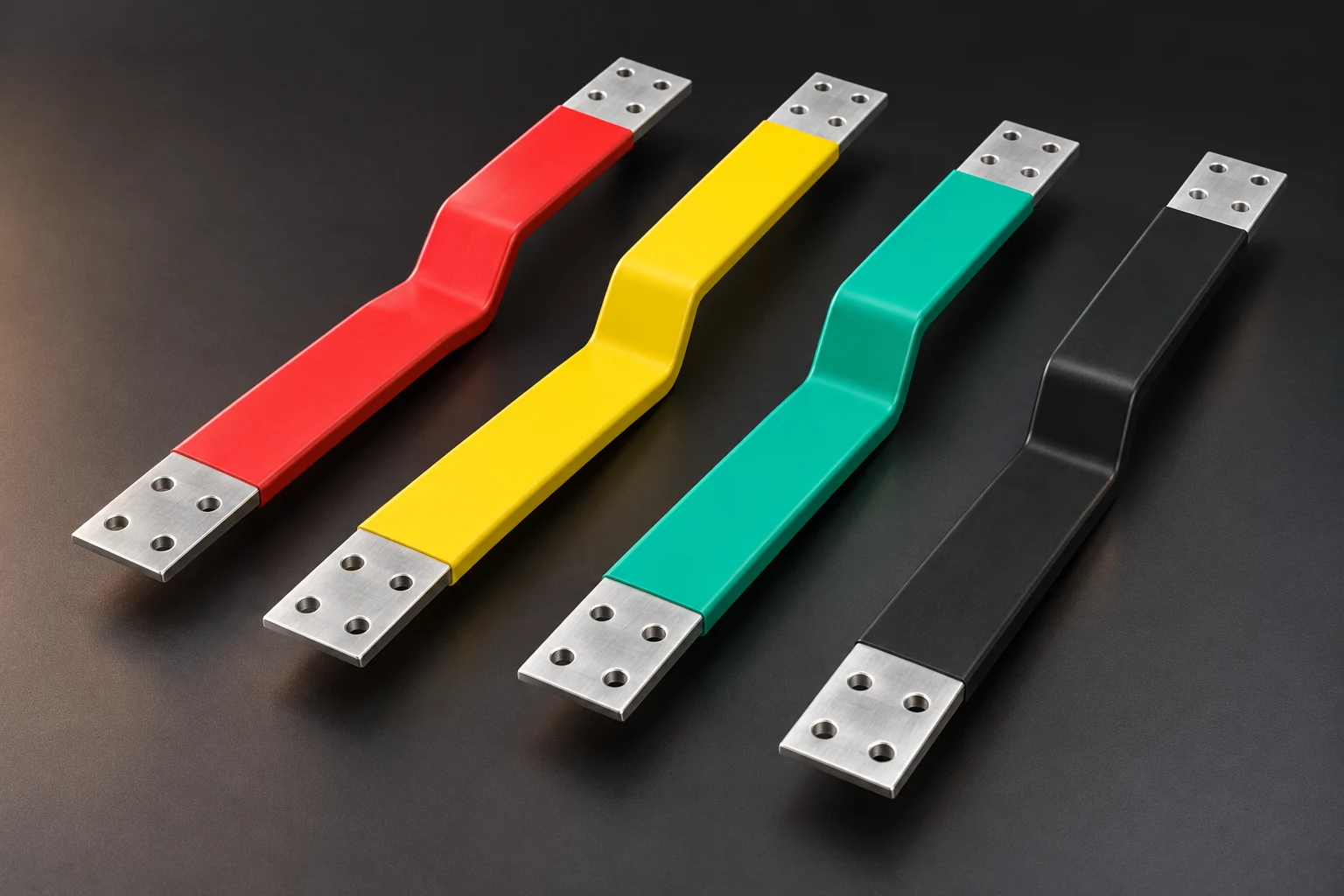
Decide whether an insulated Cu-Al busbar needs partial-discharge testing from equipment requirements and the actual voltage waveform. Agree the specimen, method and acceptance conditions before comparing reported values. A passed withstand or high insulation-resistance result does not replace required PD measurement.
Match voltage conditions to the measurement scope
IEC 60270:2025 covers charge-based measurement under AC test voltages up to 500 Hz or DC. Its public scope includes circuits, calibration and interference discrimination. Have the insulation engineer establish applicability to high-frequency switching rather than adopting a line-frequency procedure from DC bus voltage alone.
Specify working and test waveforms, frequency, polarity, insulation function and equipment requirements. Establish voltage sequence, duration and acceptance from project evidence. Do not derive a universal pC limit from cladding ratio or insulation name.
Calibrate the circuit and document interference
OMICRON distinguishes instrument calibration from calibration of the test circuit. The latter depends on the specimen, frequency range, setup and instrument; changed conditions require renewed review. An instrument certificate alone does not confirm the actual circuit.
We recommend laboratory records of connections, fixtures, grounding, frequency range and background interference. Resolve interference obscuring the acceptance range before interpreting an absence of identified pulses. Identify apparent-charge results and signals requiring further localization.
Represent the final insulation assembly
Include formed insulation, hole edges, covering ends, joints and nearby grounded parts. Record material lots, thickness, curing or thermal processing, environment and spacing. A flat material specimen does not replace the assembled busbar; review changed specimen states before comparison.
Confirm AC and DC measurement and evaluation separately, without direct conversion. Use a competent laboratory and approved safety plan, not an improvised high-voltage connection inside operating equipment. Retain original abnormal results while distinguishing specimen activity from external connections.
- Confirm waveform, method and project acceptance
- Retain circuit calibration and interference records
- Freeze actual insulation geometry and specimen state
Frequently asked questions
Does passing withstand establish no PD? The tests address different questions. Validate each required property.
Is a lower pC result always better? Compare voltage, circuit, frequency range and background conditions first.
RFQ inputs for PD review
Provide busbar and insulation drawings, grounded-part positions, voltage waveforms, equipment requirements and existing reports. Define test stage, samples and acceptance basis, then review feasibility and missing inputs before assigning supply, testing and reporting responsibilities.
Apply this guide to a project
Use product pages to identify the hardware family and the calculator for early estimates only. Acceptance depends on drawings, operating conditions and project tests.