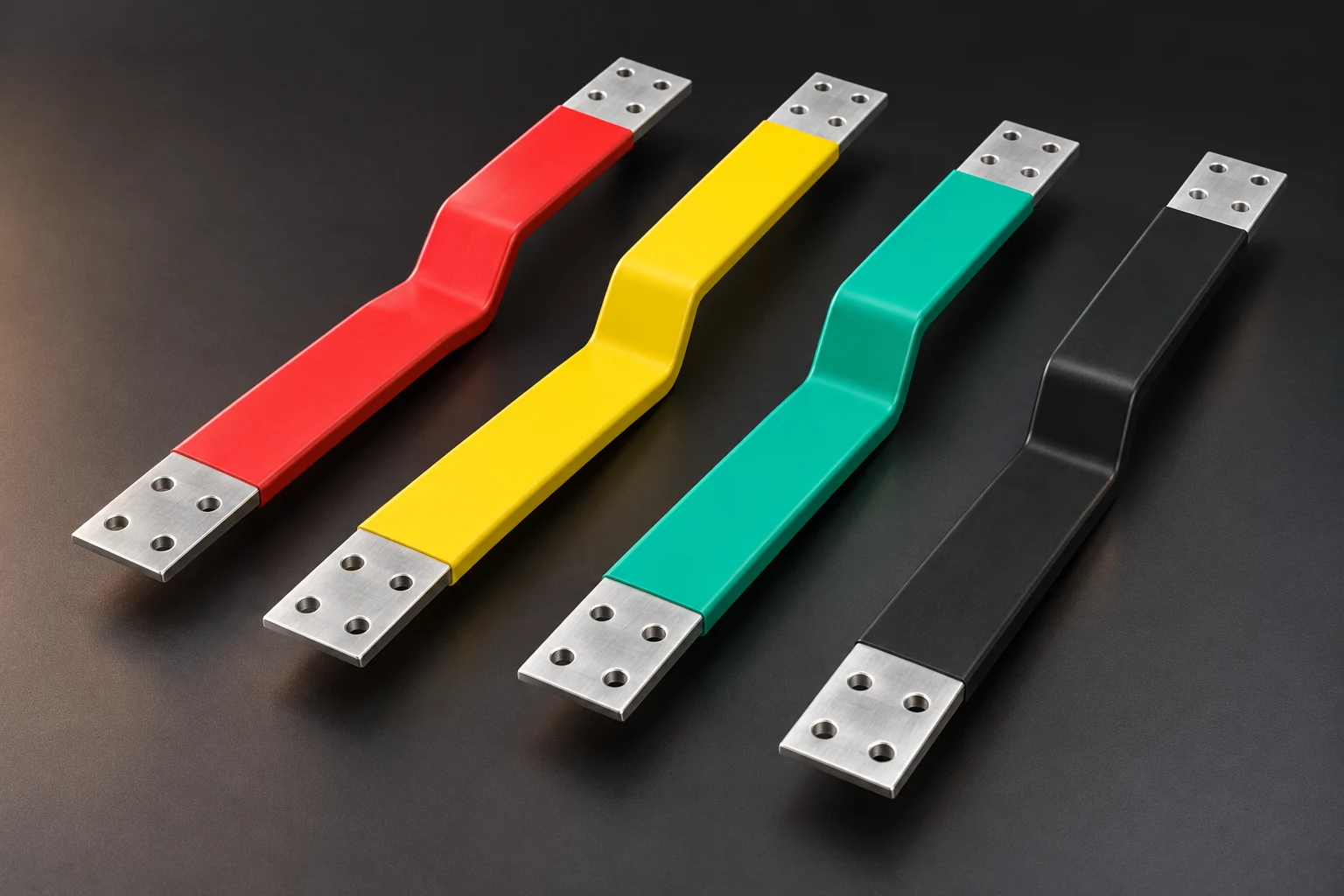
Busbar heat-shrink selection must cover installation access, recovered fit and wall requirements, as well as final end coverage. Shrink ratio alone leaves geometry and longitudinal change unresolved. Validate the specific tubing on the actual Cu-Al part.
Match tubing purpose to the actual geometry
TE's busbar tubing information covers circular and rectangular copper or aluminum bars. Its general sizing guidance describes diameter and length changes. Check voltage, temperature and installation requirements for the selected product rather than copying another series' advertised values.
Provide section tolerances, bends, maximum envelope and installation path. Ask the tubing owner to confirm supplied minimum internal dimensions, recovered dimensions and wall requirements. Rectangular width alone is not a circular outside diameter.
Specify cut length and final coverage separately
TE's sizing guidance addresses longitudinal change and damage from sharp edges. We recommend separate cut-length, final-coverage and contact-exclusion dimensions, confirmed on representative parts.
Record edge preparation and installation order, inspecting bend exteriors, holes and steps. Review another insulation form or assembly order when end access is unavailable. Do not force-stretch tubing or assume it seals a Cu-Al cut edge against water.
Validate heating and the inspection method
TE warns that insufficient heating can leave incomplete recovery and excessive heating can cause burns or splitting. Follow the selected product's instructions and retain tubing batch, part condition and process records. Tool or oven setpoints do not by themselves establish the part's heating condition.
Agree fit and wall inspection with the tubing supplier, then examine actual coverage, damage and contact areas. Assess wrinkles against product guidance. Insulation resistance, withstand, thermal and environmental checks need separate representative-assembly plans.
- Confirm product and installation path
- Allow length change and protect edges
- Record heating and validate the assembly
Frequently asked questions
Are equal shrink ratios enough for substitution? Compare purpose, dimensions, walls and installation requirements.
Can a snug sleeve justify reduced spacing? Assess the actual insulation system and applicable requirements; appearance alone cannot establish safety.
RFQ inputs for insulated busbars
Supply section tolerances, bends, end coverage and excluded contact areas, with electrical environment and assembly order. Separate tubing selection, installation and equipment validation responsibilities. Resolve missing recovery or heating data before setting generic thickness or process temperatures.
Apply this guide to a project
Use product pages to identify the hardware family and the calculator for early estimates only. Acceptance depends on drawings, operating conditions and project tests.