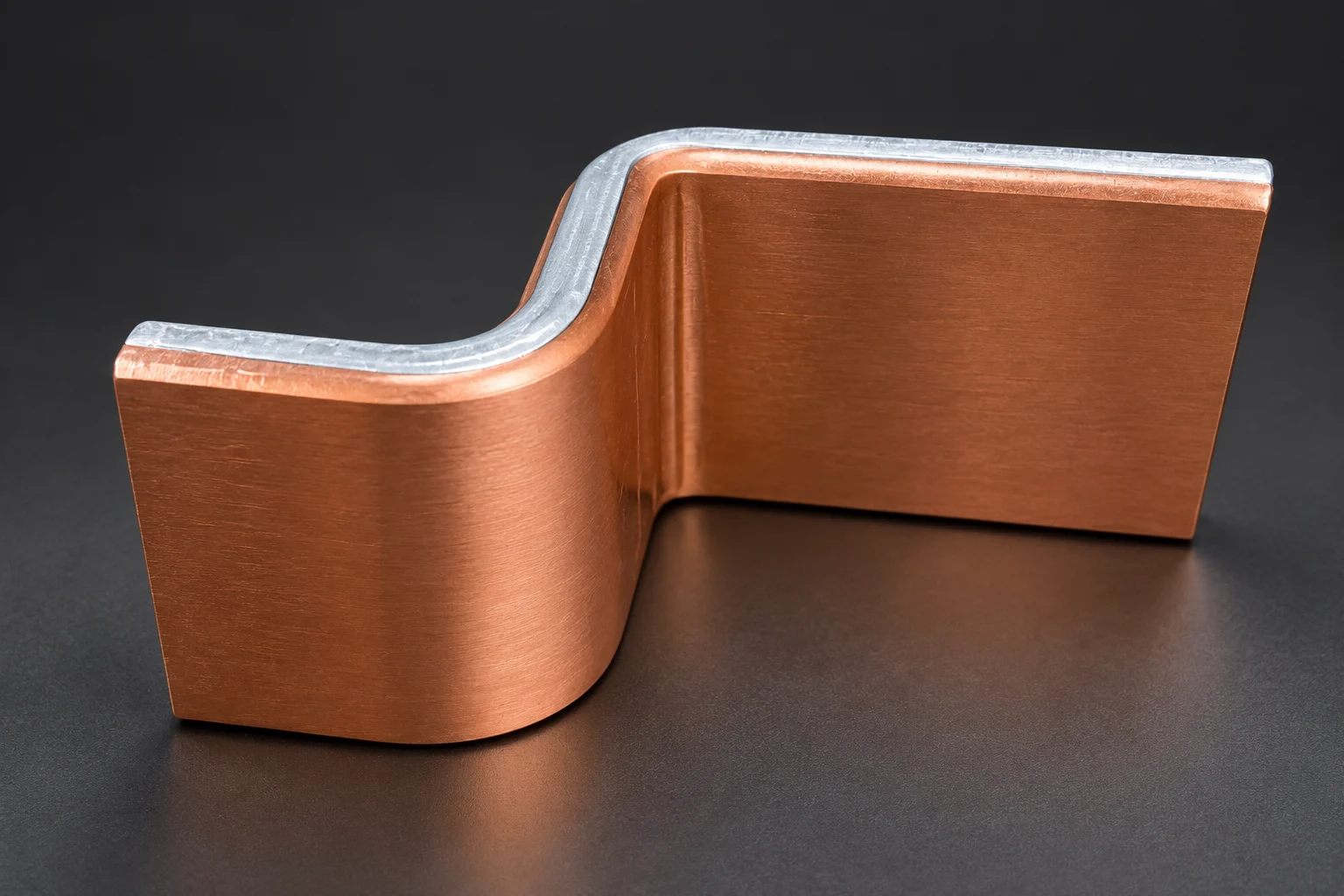
Apply IP requirements to the actual enclosure and feedthrough assembly when a Cu-Al busbar crosses a cabinet wall. Insulation on the bar does not establish a sealed opening. Define the protection boundary and installation state before reviewing seals, tolerances and verification responsibilities.
Separate enclosure classification from conductor requirements
IEC 60529 classifies protection provided by electrical-equipment enclosures. Material, color or insulation appearance alone cannot assign a cabinet IP classification to a bare bar. Establish the required enclosure class and applicable equipment requirements.
We recommend separate checks for conductor insulation, joint corrosion protection, enclosure protection and electrical spacing. Acceptance of one does not release the others. Identify components, installation instructions and evidence supplied by the bar supplier and cabinet integrator.
Trace sealing interfaces through a section drawing
Identify wall openings, supports, gaskets, frames, fastening holes and covering ends. Trace outside-to-inside paths and establish whether a seal bears on conductor, insulation or a dedicated feedthrough. Visual continuity is not structural confirmation.
Specify cladding and insulation termination positions. Review seal compatibility with actual surfaces, temperature and media rather than assuming one adhesive or gasket suits every finish. Include seal replacement and reassembly rules for service access.
Validate the final assembly state
Freeze wall thickness, opening and conductor tolerances, compression structure, orientation and other openings. Review correspondence to the final equipment if specimens omit covers, seals or cable entries. A gasket material report alone does not validate the assembly.
Plan protection, temperature-rise, movement and insulation checks separately, reviewing their sequence as needed. Evaluate water traces under the approved plan; never explore leaks while energized. Changed openings, seal identities or fasteners require review of the original report's applicability.
- Define enclosure and feedthrough protection boundaries
- Freeze interfaces, assembly tolerances and service state
- Assign final-assembly verification and change responsibilities
Frequently asked questions
Can an insulated bar carry the cabinet's IP claim? Establish evidence for the corresponding enclosure or assembly; insulation alone cannot imply it.
Does an existing cabinet report cover a new opening? Review whether the modified feedthrough remains within its scope.
RFQ inputs for feedthrough review
Provide protection requirements, wall openings, busbar dimensions, seals, supports, temperature and service conditions. Separate component supply from final-enclosure validation. Agree tolerances, assembly control and change notices, identifying unresolved feedthrough details in the quotation.
Apply this guide to a project
Use product pages to identify the hardware family and the calculator for early estimates only. Acceptance depends on drawings, operating conditions and project tests.