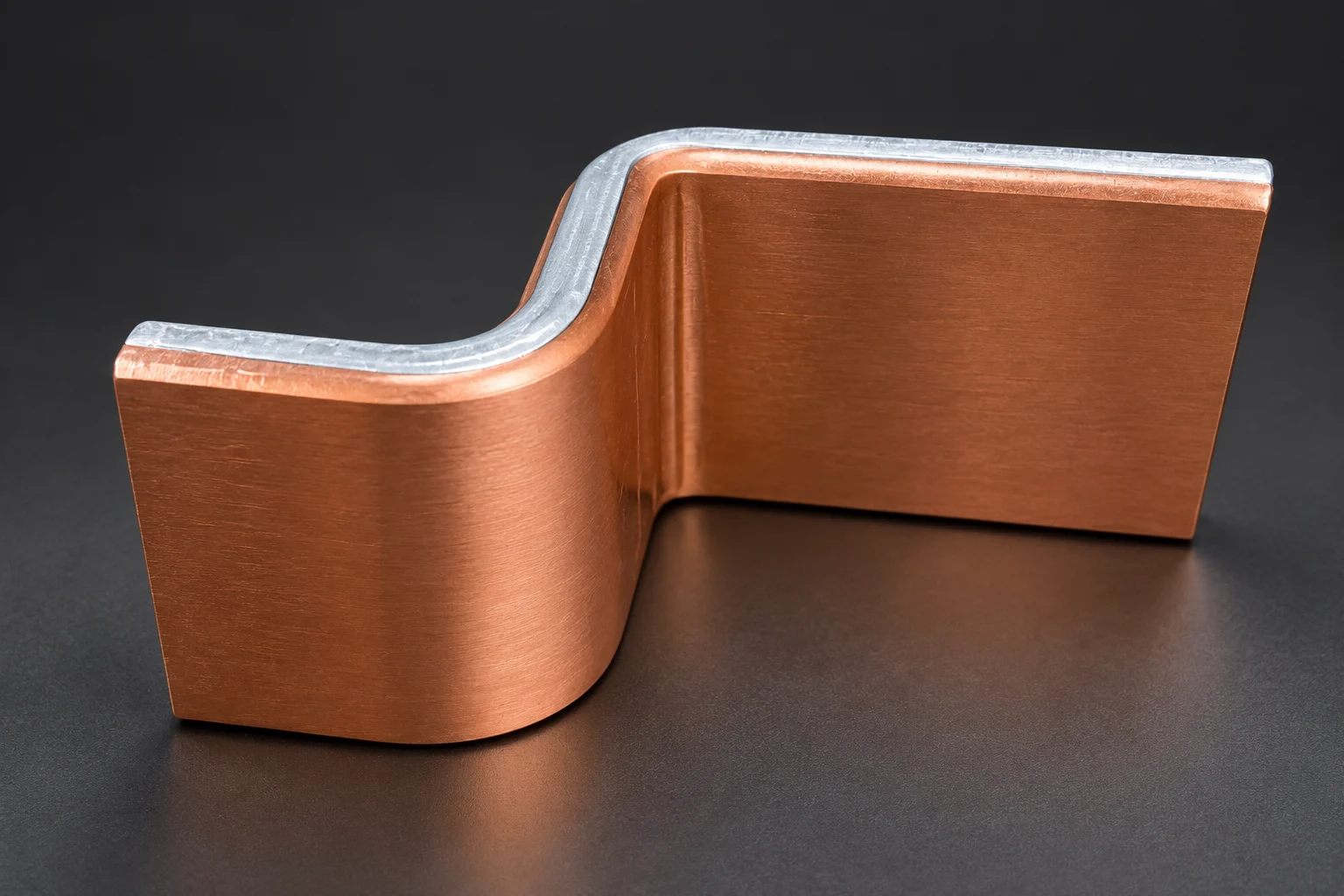
Decide whether a Cu-Al busbar joint needs contact compound from its actual mating faces, counterpart terminal and approved assembly process. Copper cladding, exposed aluminum and tin plating require separate review. Confirm material compatibility, application and validation before issuing work instructions.
Identify the materials at the electrical interface
We recommend marking mating materials, plating boundaries, cut edges and insulation setbacks on the joint drawing. An aluminum-containing bar does not necessarily have an exposed aluminum mating face. Check cladding continuity, exposed hole edges and both suppliers' preparation requirements.
AFL identifies flat aluminum-to-aluminum and aluminum-to-copper joints among its No. 2 compound applications. This is product-specific information, not approval for every composite, coating or insulation. Obtain the candidate compound's technical documentation and compatibility evidence.
Separate cleaning, film removal and thread lubrication
BURNDY's aluminum compression-terminal instructions distinguish bare conductors from tin-plated terminals and prohibit wire-brushing the tin-plated terminal. That procedure belongs to its compression system, not a universal composite-busbar process. Review the proposed treatment against the actual cladding and finish.
We recommend specifying cleaner, tools, permitted waiting time and application regions separately. A compound approved on mating faces is not automatically a thread lubricant. Changed thread conditions require torque/preload review. Do not grind away cladding or plating of unknown thickness.
Validate a repeatable assembly process
Use representative joint area, fasteners, surfaces and insulation boundaries. Record compound identity, lot, application and excess-removal requirements. Compare resistance, temperature rise and changes after prescribed environmental tests under the approved plan. Compound cannot compensate for warped faces or inadequate pressure.
Review migration onto threads, insulation or adjacent contacts. Qualified personnel must prepare joints in a safely isolated state; never clean or coat an energized busbar. Have the project owner determine retesting after material or process changes.
- Identify mating materials and finish against a drawing revision
- Freeze contact-face and thread conditions separately
- Record application consistency and validation conditions
Frequently asked questions
Does every Cu-Al bar require compound? Decide from the actual mating faces and approved joint system, not the material name alone.
Is a thicker layer more reliable? Follow the specific product instructions and qualified process. More compound cannot replace flatness, pressure or validation.
RFQ inputs for joint-process review
Provide the bar section, counterpart terminal, finish, fasteners and environment, plus candidate compound data and assembly instructions. Review compatibility and sample validation before agreeing which preparation, application and inspection operations the quotation includes.
Apply this guide to a project
Use product pages to identify the hardware family and the calculator for early estimates only. Acceptance depends on drawings, operating conditions and project tests.