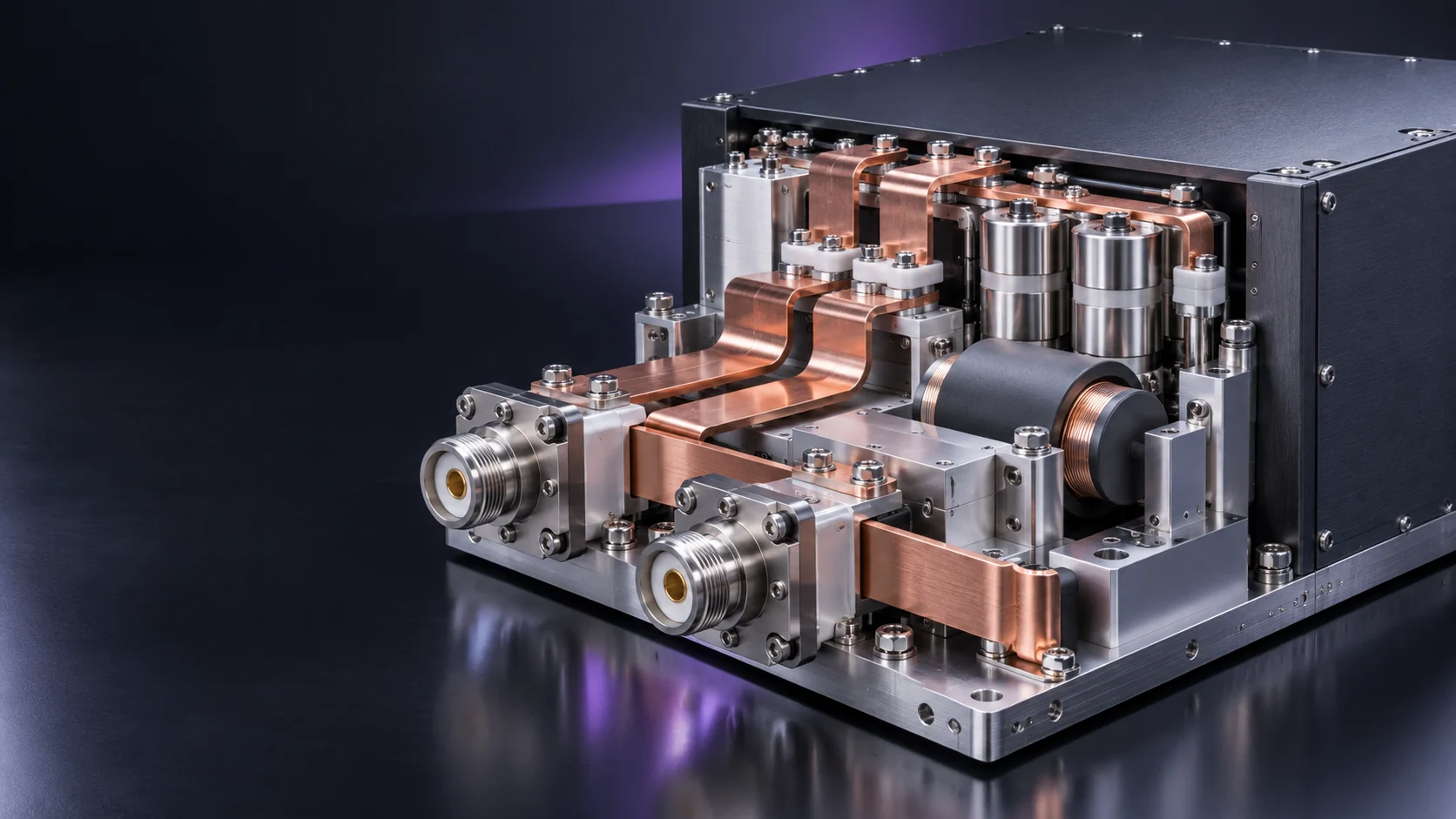
Busbar length, return path and shield contact affect RF output stability and impedance repeatability after maintenance. Materials, finishes and cleaning must also fit the clean boundary of the power bay and process chamber.
Define the RF forward path, return and shield reference
Map the power amplifier, matching network, output terminal, return bar, shield and protective earth. Record frequency, pulse mode, peak current, allowed drop and impedance target before selecting parallel bars, a 3D jumper or a strip structure.
Keep the low-resistance path clean and insulated
Copper grade, finish, cleaning residue, burrs and insulation can influence maintenance repeatability. Keep a measurable contact face, stable shield pressure and enough withstand, creepage and tool clearance around the chamber interface.
- Measure four-wire drop, loop impedance, rise and RF output stability
- Inspect finish, particle risk, insulation spacing and shield continuity
- Repeat impedance, torque, position and ground checks after terminal replacement
Describe clean handling and service in the RFQ
Provide frequency and power curves, 2D and 3D data, materials and finish, cleaning-agent limits, vacuum or inert-gas boundary, shield method, service interval, instruments, packaging and lot traceability. Name the fixture, cable length and calibration state for sample acceptance.
Apply this guide to a project
Use product pages to identify the hardware family and the calculator for early estimates only. Acceptance depends on drawings, operating conditions and project tests.