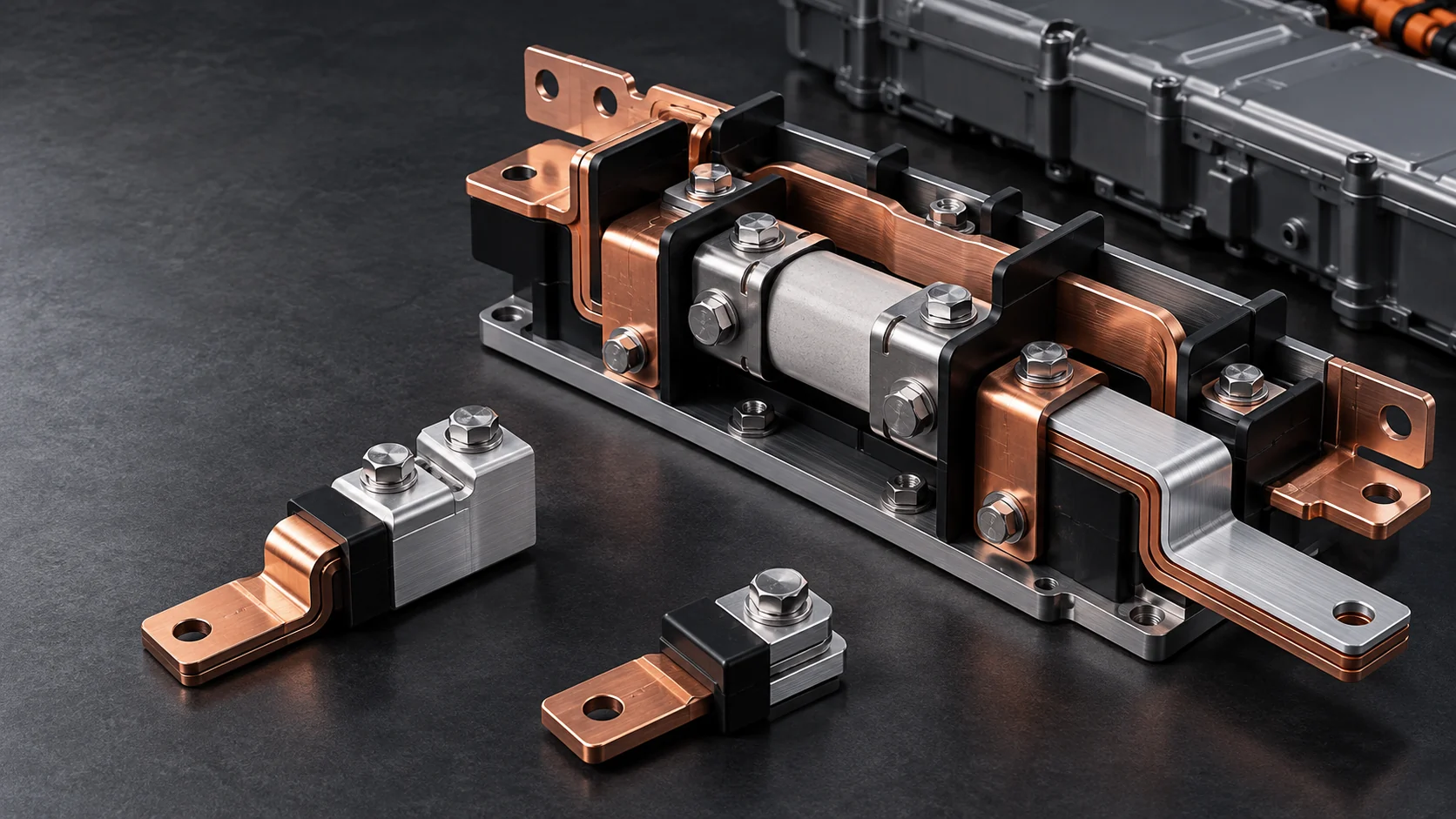
Laser power supplies place switches, magnetics and capacitors at different heights while carrying pulsed current through a low-noise loop. SMT copper mass and support change both reflow quality and service risk.
Choose the path from the high-di/dt loop
Mark switches, rectifiers, magnetics, DC-link capacitors and output terminals, then separate the high-frequency commutation path from the lower-frequency supply path. Compare a 3D jumper, heavy-copper PCB and bolted busbar by loop area, parasitic inductance, end drop and cooling clearance.
Lock the heavy-copper reflow window
Copper mass, pad zoning, stencil apertures, underside support and nozzle direction jointly control the solder joint. End height and insulation keep-outs must also clear heat sinks and shields after reflow distortion.
- Record continuous current, pulse current, switching frequency and allowable rise
- Check coplanarity, wetting, pad peel strength and placement location
- Repeat drop and noise-coupling checks after thermal, vibration and withstand tests
Match packaging to automated equipment
Provide 2D and 3D data, land pattern, copper, finish, pickup face, carrier direction, reflow profile, inspection method and annual volume. The supplier should state end flatness, moisture protection and lot traceability.
Apply this guide to a project
Use product pages to identify the hardware family and the calculator for early estimates only. Acceptance depends on drawings, operating conditions and project tests.