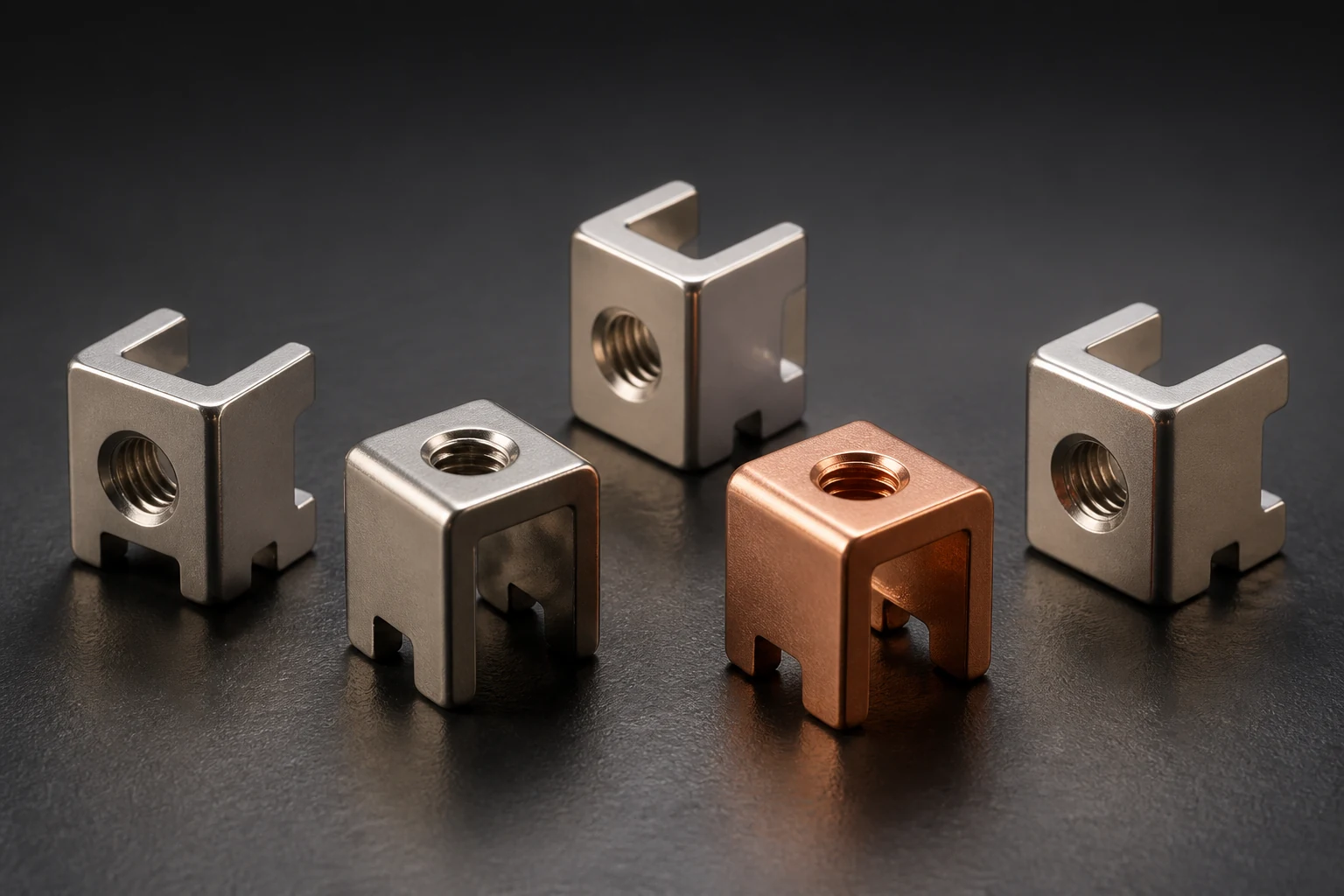
Review an IMC section report with solder alloy, finish, thermal history and measurement location. IMC means intermetallic compound. Thickness alone cannot establish joint reliability. First identify the side, layer and condition actually examined.
Identify the reacting materials
Indium discusses solder interface reactions and differences between metallizations. Copper and nickel surfaces cannot be interpreted identically because joints look similar. Equal oven settings do not automatically establish equal interfaces on different finishes.
We recommend terminal substrate and finish stack, PCB finish, alloy and actual heat history. Identify terminal and pad sides separately, with reflows, touchups and aging traceable. A solder interface on a copper terminal is a different object from the internal interface of a Cu-Al composite conductor.
Tie thickness results to identified sections
Agree cut locations, direction, preparation and imaging, retaining low magnification location views and detailed images. Define boundaries, local maximum versus average and point count. Do not compare different statistics as if they were the same quantity.
Retain spatial variation rather than selecting one attractive section to represent every joint. Record and review smearing, pores and unclear boundaries. Phase identification needs a suitable method rather than contrast or one composition reading. The laboratory should state capability and limitations.
Assess aging alongside actual joint performance
Indium's aging discussion addresses time and temperature dependent interface growth and the limitations of its projections. Its curve, temperatures and durations cannot directly predict this terminal's life or establish equipment service years.
Compare matched initial and exposed samples, considering cracks, pores, mechanical fracture locations and required electrical checks. Neither minimum nor maximum layer thickness is a universal objective. Set acceptance through material, process and equipment validation, then review changed finish, alloy or rework rather than comparing a thickness target alone.
Frequently asked questions
Does good wetting remove the need for interface inspection? Appearance, structure and performance checks have distinct coverage.
Can measured IMC thickness establish remaining life? That requires corresponding failure mechanisms, conditions and validation, not one number.
Motor controller PCB copper terminal RFQ inputs
Provide terminal and pad finishes, alloy, heat history and joint drawings, identifying the side to inspect. Separate preparation, measurement definitions, individual results, anomaly review and correlated mechanical/electrical checks before comparing laboratory or sample costs.
Apply this guide to a project
Use product pages to identify the hardware family and the calculator for early estimates only. Acceptance depends on drawings, operating conditions and project tests.