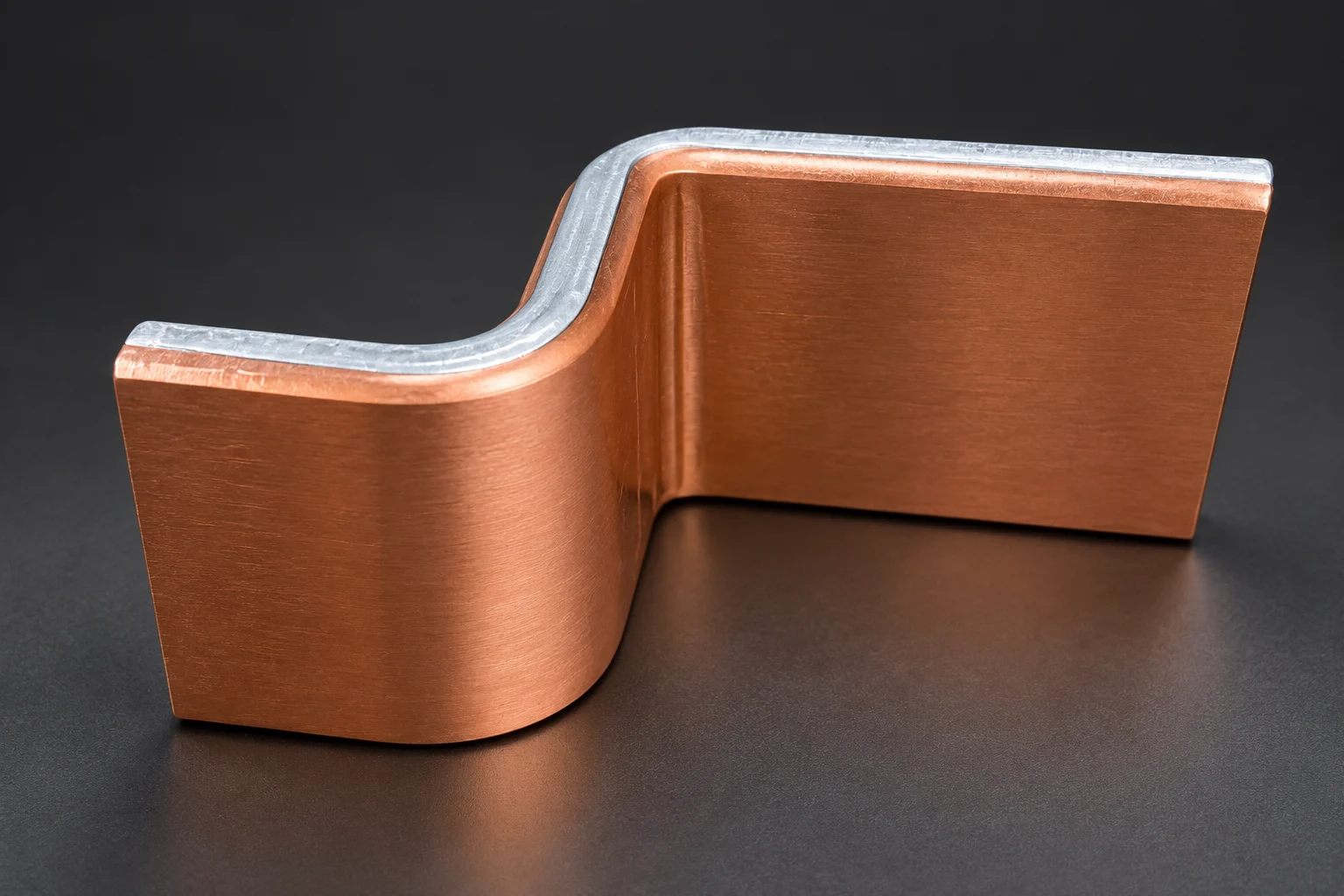
Start incoming inspection with the specified composite structure and temper, then check dimensions, copper distribution and lot evidence. Copper-colored surfaces, overall thickness or a conductivity report alone cannot identify the delivered construction. Separate raw-stock requirements from finished-part acceptance.
Identify the construction in the order
Specify fully clad, one-sided, two-sided or local transition construction, copper contact faces, permitted exposed edges, width, thickness and temper. Equal overall sections can still require different joining and processing controls.
ASTM B1005-17(2023) covers copper-clad rectangular aluminium bar for electrical use. Its classes combine nominal copper volume fraction with annealed or hard-worked condition. Check scope before specifying it; local transition pieces and other constructions need an agreed specification.
Separate copper thickness from copper fraction
Specify copper coverage on functional faces and define overall copper fraction separately. Volume and mass fractions are different because the constituent densities differ; a weighing result cannot simply be entered as a volume fraction.
For a substantially uniform longitudinal construction, copper area fraction in a section can check the geometric basis of volume fraction. Record sampling position, section preparation, corner coverage and measurement method. One thickness reading cannot establish all-around coverage or full-length uniformity.
Link samples to the delivered lot
Agree representative positions at first-article review and associate samples with material lot, processing batch and original bar identification. Set sample counts and limits in the contract according to risk.
Inspect hole edges, bends, cut ends and contact faces after processing. Raw-stock records do not cover changes caused by punching, bending, plating or insulation work. Investigate suspected cracking or separation using an approved method; a clean visual inspection alone does not establish bond strength.
- Mark sampling locations and directions and retain original images and readings
- Record overall dimensions, copper distribution, temper and lot electrical data separately
- Define isolation and retest procedures before releasing abnormal or mixed material
Frequently asked questions
Is thicker copper always better? Coverage must meet contact and processing needs while weight and cost also change. Select the construction using electrical, mechanical and environmental validation.
Does citing ASTM B1005 certify a product? A citation defines a purchasing requirement. Applicability, supply evidence and the specified test results must support a conformity claim.
Include acceptance inputs in the RFQ
Provide a section drawing, constituent grades and tempers, functional faces, copper-thickness and fraction definitions, finished dimensions, processing route, volume and sampling requirements. Resolve open items during sample review before freezing the production specification.
Apply this guide to a project
Use product pages to identify the hardware family and the calculator for early estimates only. Acceptance depends on drawings, operating conditions and project tests.