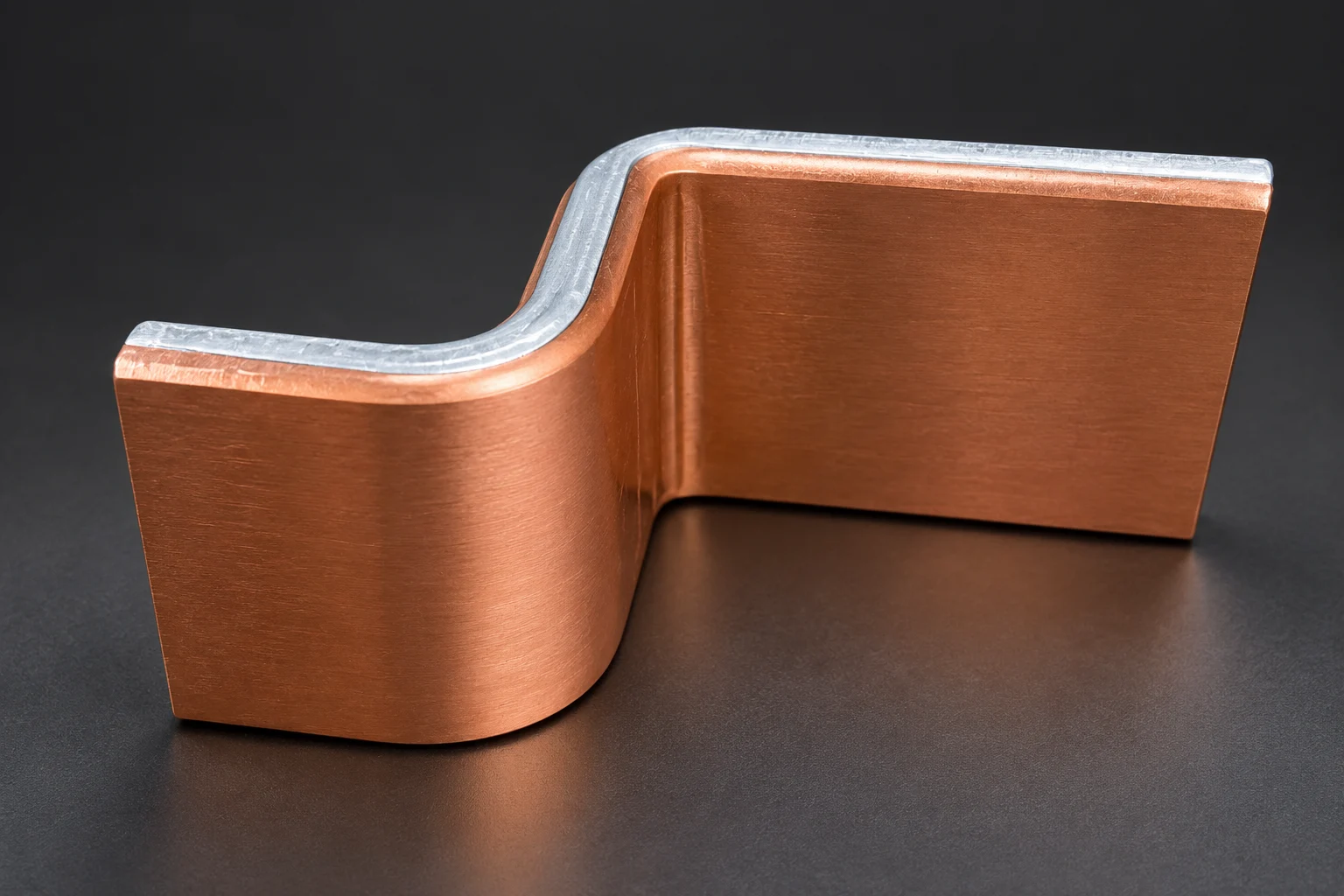
Review clamp force retention on the actual UPS Cu-Al joint assembly. Material relaxation data can inform design only with its control mode, temperature and duration stated. A specimen's retained stress ratio does not directly specify the retained clamp force of a complete bolted connection.
Identify the quantity held constant
The public scope of ASTM E328, 2026 edition, describes relaxation under approximately constant constraint and environment, tracking the force needed to maintain that constraint. Creep testing commonly maintains tensile force or stress and observes deformation over time. Keep these control modes distinct.
Request the initial force or stress, control mode, temperature and time origin beside each curve. A falling trace without these conditions is insufficient for comparing candidate materials.
Separate specimen and assembly records
For material trials, specify layer construction, sampling direction, condition and geometry. For joint trials, separately record fasteners, washers, grip length, contact preparation, assembly sequence and force measurement location. Identify which result supports material comparison and which supports assembly acceptance.
Ask the laboratory to review constraint variation, fixture behavior and temperature records. Preserve interruptions or reloading events rather than joining the traces into an unexplained continuous hold.
Agree holding and retesting before quotation
Define duration, thermal history, sample quantity and acceptance conditions. State whether retightening is permitted. If performed, record the operation and timing so its results remain distinguishable from an uninterrupted trial.
List clamp force observation, contact resistance and temperature rise as separate checks on the same assembly revision. Short material trials do not establish years of joint life or remove the need for electrical verification.
Frequently asked questions
Does high retained specimen stress prove a joint will remain tight? The assembly needs evidence covering its own stack and installation.
Can final removal torque replace the clamp force trace? These are different measurements and must be specified separately.
UPS Cu-Al connection RFQ inputs
Provide layer and joint drawings, fastener BOM, assembly procedure and operating thermal history. Separate material testing, assembled holding trials and electrical rechecks, including retightening rules and required reports.
Apply this guide to a project
Use product pages to identify the hardware family and the calculator for early estimates only. Acceptance depends on drawings, operating conditions and project tests.