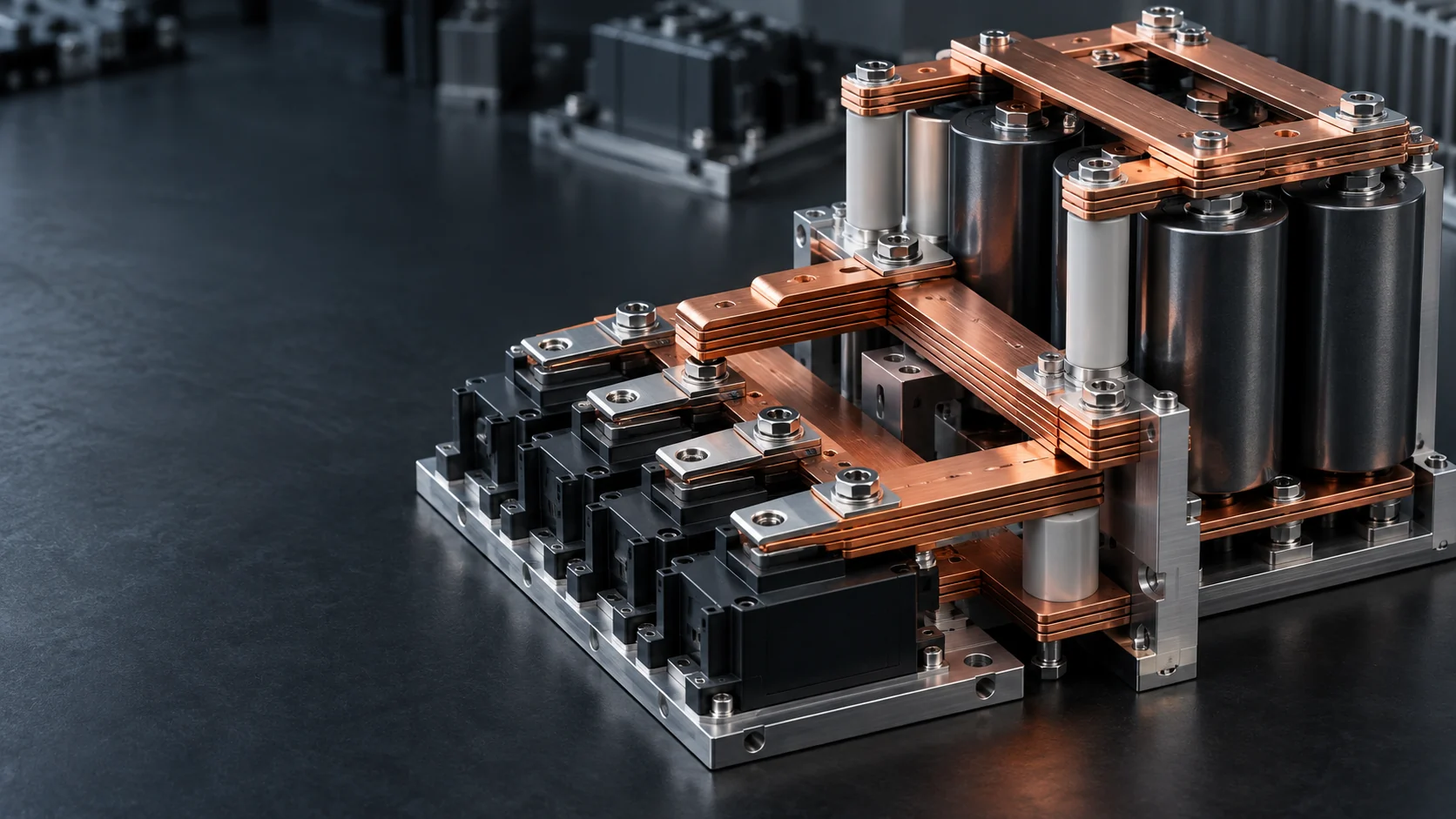
Battery modules, racks and cooling plates move relative to each other during charge and discharge. Flexible copper links absorb part of that movement, but their braid terminations, fixing points and insulation still see repeated loads.
Calculate movement before choosing the flexible section
Show module, rack, cooling plate and terminal positions in one drawing, then record temperature range, displacement direction, continuous current, peak current and fault duration. Flexible length, bend radius and free movement should follow the displacement requirement.
Give braid ends and rigid bars different jobs
The braid absorbs movement while the rigid bar provides location and low-resistance contact. Add sleeves, stops and strain relief around the crimped or brazed end so bending does not concentrate at a plating edge or bolt root.
- Measure resistance, rise and insulation after hot and cold cycling
- Run pull, bend, vibration and torque-retention checks on the end transition
- Check creepage and poka-yoke features between adjacent modules
Supply records for rack replacement work
The RFQ should state rack layers, module mass, mating direction, service cycles, cooling method, enclosure rating, cleaning condition, annual volume and packaging. Each lot should retain material, finish, dimensions, resistance and inspection photographs.
Apply this guide to a project
Use product pages to identify the hardware family and the calculator for early estimates only. Acceptance depends on drawings, operating conditions and project tests.