Distinguish laser-flash thermal diffusivity from conductivity calculated using additional data. Align temperature, direction, layer structure and model before comparison. A small specimen's thermal property does not directly determine whole-busbar operating current or cabinet temperature rise.
Identify measured and calculated parameters
NETZSCH explains LFA through a short pulse on one face and the time-dependent temperature response on the opposite face. Conductivity calculation also needs heat capacity and density at the corresponding temperature. Identify each input source instead of describing all outputs as one direct measurement.
Use consistent units and temperatures. Identify literature, supplier or separate-specimen inputs and review applicability. Do not combine pure-copper inputs with composite diffusivity without explanation.
Use a model appropriate to the layered specimen
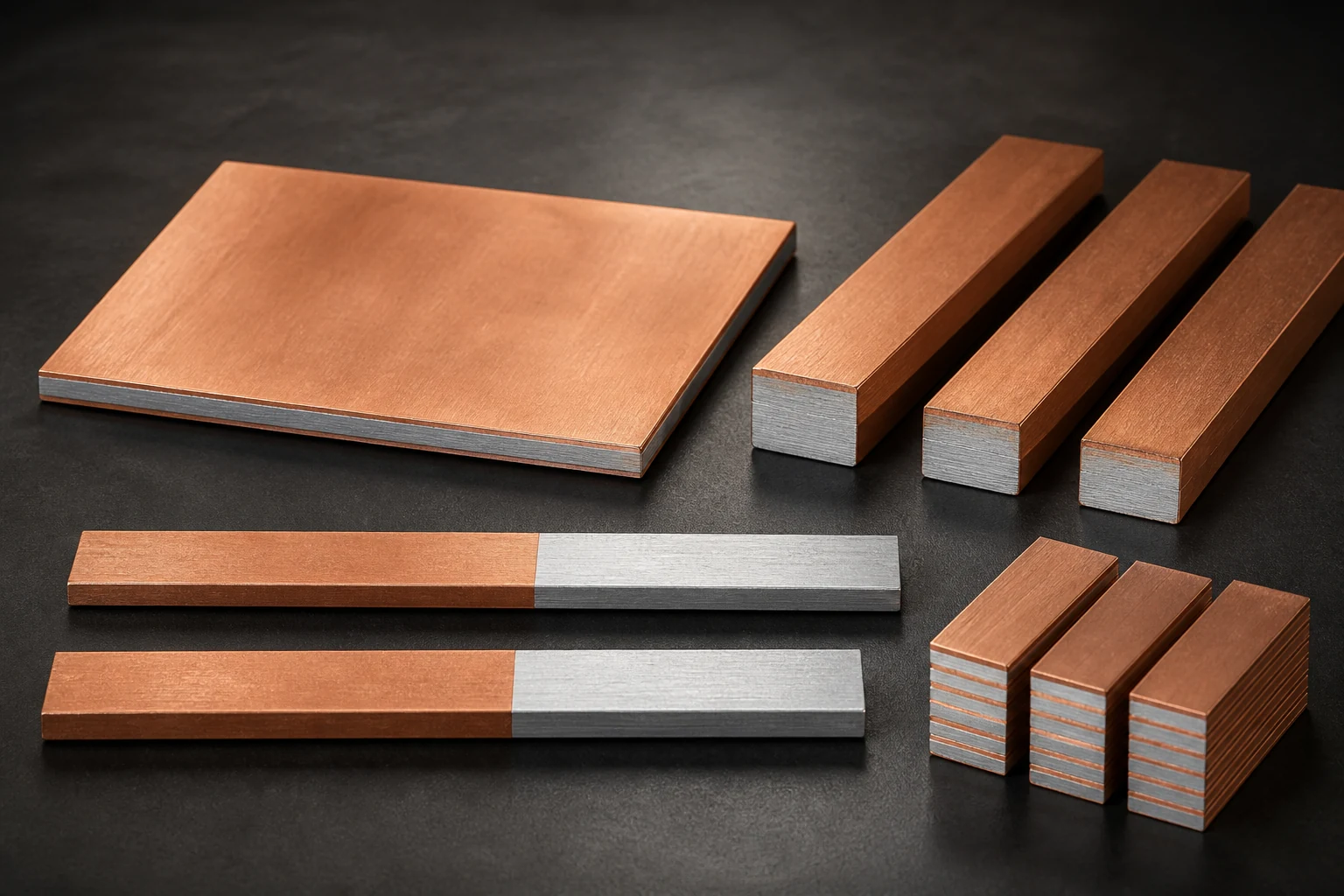
NETZSCH's multilayer guidance requires appropriate models, precise preparation and signal interpretation for two- and three-layer systems. Record layer sequence, individual thicknesses and heat-flow direction. State whether the result describes an effective assembly property or an inferred individual layer.
Lengthwise and through-thickness sampling are different directions. Keep direction and structure explicit when comparing candidates. Different models or orientations should not become one unexplained ranking by number.
Connect specimen evidence to the actual thermal design
Propose sampling locations, finished condition, temperature points and repeat measurements. Retain raw signals and fits. Have the analyst assess surface preparation and geometry rather than copying a pure-copper demonstration recipe.
Conductivity can inform a thermal model, but joints, insulation, supports and cooling require complete-part assessment. Confirm temperature rise with the actual assembly and agreed load. Do not derive a universal current-uplift percentage from this report.
Frequently asked questions
Does higher diffusivity guarantee higher conductivity? Heat capacity, density, temperature and model also matter.
Can one coupon cover every layer ratio? Review applicability after changing the stack or sampling direction.
ESS PCS busbar thermal-design RFQ inputs
Provide stack, dimensions, heat-flow direction and existing reports. Specify effective properties versus individual-layer data. Quote sampling, thermal analysis and complete-assembly temperature-rise validation separately, leaving unknown inputs for review.
Apply this guide to a project
Use product pages to identify the hardware family and the calculator for early estimates only. Acceptance depends on drawings, operating conditions and project tests.