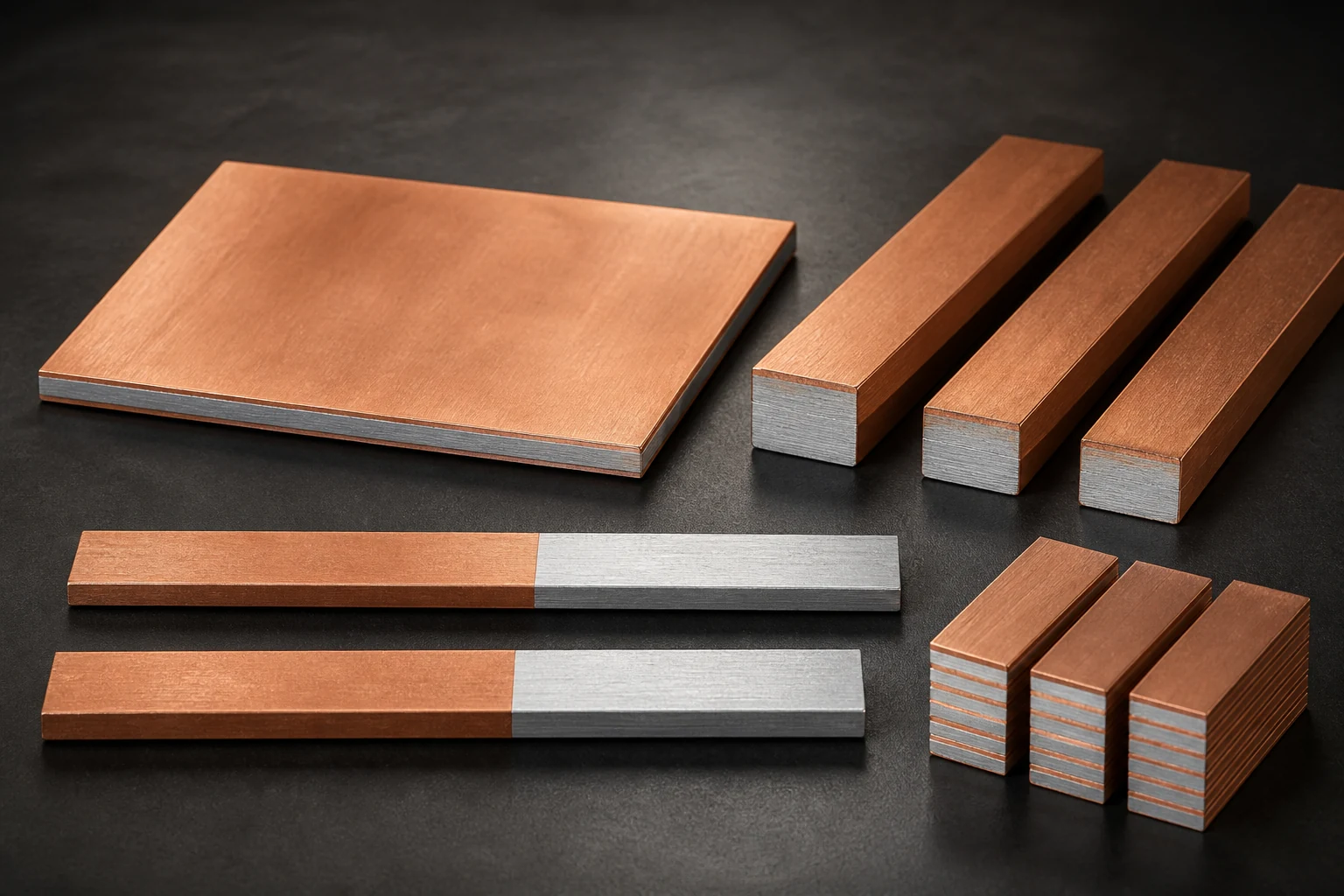
First establish whether the comparison concerns a clad material or a local joint. Different geometries and tests cannot be ranked using an isolated strength value.
Define the supplied structure
Identify alloys, interfaces, dimensions, subsequent forming and the supplier's proposed route.
- Check processing near interfaces.
- Match reports to the supplied geometry.
Align tests
Compare strength, resistance and processed condition under equivalent specimen and measurement methods.
- Review loading direction and failure mode.
- Plan relevant post-processing and environmental retests.
Procurement decision
Compare accepted parts, consistency, inspection and actual quantities. Third-party reports do not establish the supplier's certification or capability.
- Request traceable batch documents.
- Provide final drawings and acceptance scope.
Apply this guide to a project
Use product pages to identify the hardware family and the calculator for early estimates only. Acceptance depends on drawings, operating conditions and project tests.