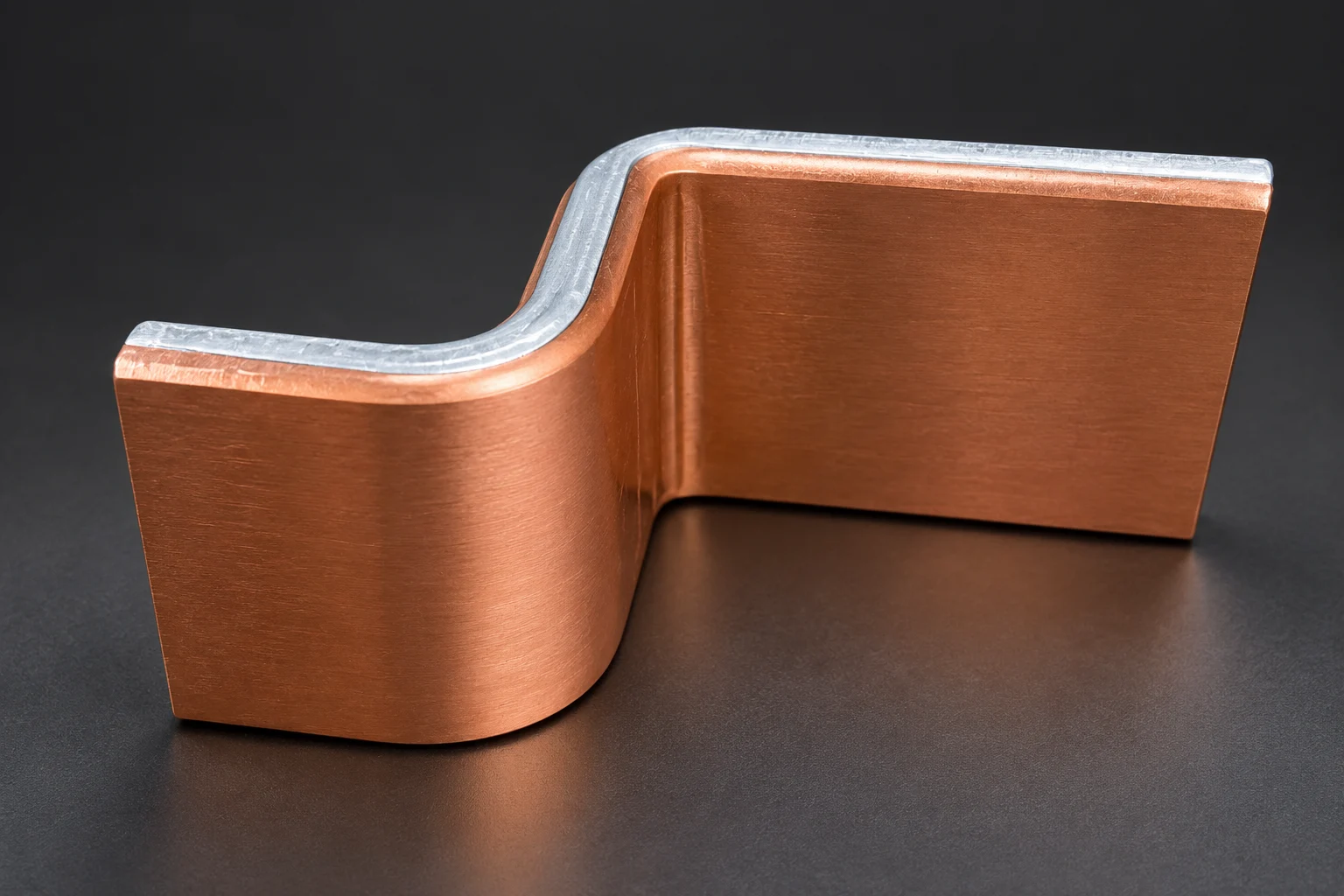
Decide whether a UPS Cu-Al busbar needs a thread insert by identifying the load bearing layer, surrounding material and assembly space. An insert can be assessed for thread reinforcement, but does not qualify the composite interface, current path or joint temperature rise. Send both the layer section and threaded hole section with the RFQ.
Separate the mechanical load path from conduction
Böllhoff describes HELICOIL reinforcement for materials including aluminum and distinguishes free running from locking variants. That purpose does not establish compatibility with every Cu-Al construction.
Mark the hole relative to copper, aluminum and the bonded interface. Draw the entire clamped stack and identify the electrical contact faces. Do not assign the mechanical wire insert an assumed busbar current rating. Have the designer review remaining section and inspection coverage wherever machining crosses the interface.
Define preparation for the selected insert system
Böllhoff separately specifies holding thread preparation, gauging and installation tooling. State the complete insert designation, holding thread requirements, installed depth and effective engagement. A final M5 or M6 internal thread callout alone does not define this machining package.
For blind holes, distinguish drilled depth, complete holding thread depth, insert position and screw end clearance. Confirm tool access and installation rules for the selected system. Manage tang and tangless variants separately, documenting removal and foreign material checks wherever tang breakoff is required. Do not borrow another system's drill size.
Validate assembly conditions on representative parts
Retain holding thread, insert position, final thread and cleanliness checks. Agree pullout or assembly load verification as required by the design. Passing a thread gauge alone does not demonstrate the load capacity of the surrounding aluminum or bonded layers.
Review insert type, bolt, finish and lubrication before setting installation torque and verification. Keep resistance, temperature rise and clamp retention checks separate. An assembly permission established without the insert does not automatically cover the new stack.
Frequently asked questions
Can the busbar be thinner after adding an insert? Reassess supporting material, interface and conducting section first.
Can a repaired hole pass automatically against the original drawing? Obtain design approval for repair geometry, machining and acceptance, retaining its record.
UPS Cu-Al connection RFQ inputs
Supply layer and threaded hole sections, bolt and insert designations, expected assembly cycles and contact requirements. Separate insert supply, machining, installation inspection and electrical qualification. Resolve unknown supporting layers or depths during sampling.
Apply this guide to a project
Use product pages to identify the hardware family and the calculator for early estimates only. Acceptance depends on drawings, operating conditions and project tests.