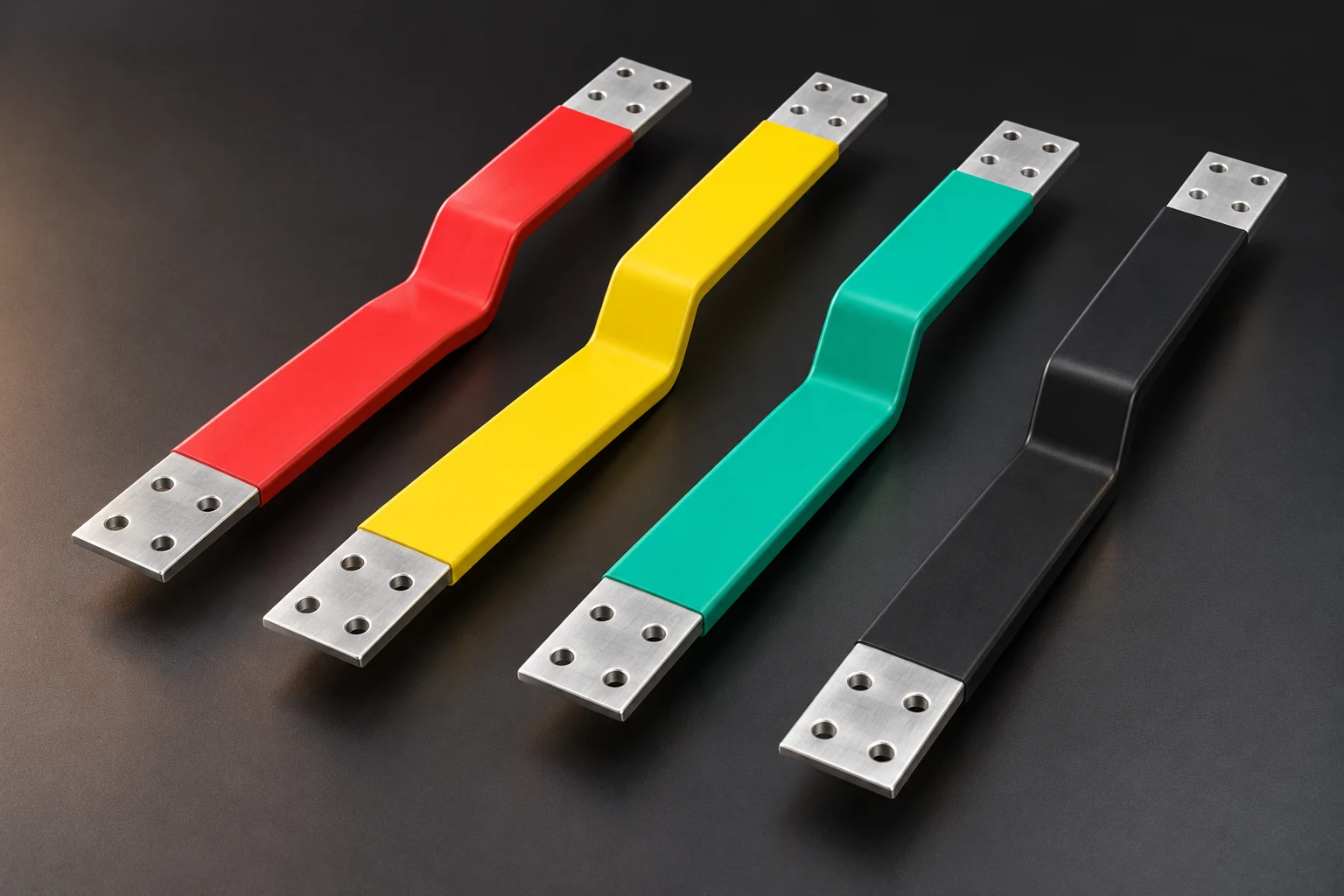
Identify coating type, thickness and cross-cut method before acceptance. A classification cannot be converted into adhesion strength or replace insulation-resistance and withstand checks. Heat-shrink sleeves and the metallurgical Cu-Al interface need separate evaluation.
Check whether the method applies
We reviewed public ISO 2409 (2020 edition) and ASTM D3359-23 scopes. Conditions and methods differ. Cross-cut classification is empirical, while tape ratings do not provide absolute rupture force; do not interchange ratings.
We recommend supplying coating, cure, thickness and substrate information before method selection. Assess thick, textured and curved areas separately. Organic-film procedures must not be transferred to the metallurgical interface or a loose sleeve.
Retain location and production condition
Specify regions on drawings, distinguishing copper, aluminum and formed corners. Record how flat coupons correspond to production preparation, coating and cure. A coupon does not automatically represent every edge.
Agree tools, cutting method and classification before testing. Retain photographs. For tape methods, control tape identity and removal conditions rather than treating changed materials as an identical retest.
Separate failure layers and electrical acceptance
Identify the separating layer and location in multilayer systems. We recommend retaining observations rather than only a pass label. Destructively cut regions must not be released as intact insulation without agreed treatment.
Assess attachment and electrical insulation separately. A withstand pass does not resolve missing coating evaluation, and a good classification does not establish defect-free insulation throughout the busbar. Agree retention, repair or disposition of destructive specimens.
Frequently asked questions
Can a rating be converted into MPa? No quantitative conversion follows; select an appropriate strength method separately.
Does a good rating establish withstand performance? Test the complete structure under project conditions.
Selection and RFQ inputs
Provide coverage, uncoated contacts, coating system and thickness requirements. Agree locations, revision, classifications and failure records. List electrical objectives separately.
Apply this guide to a project
Use product pages to identify the hardware family and the calculator for early estimates only. Acceptance depends on drawings, operating conditions and project tests.